
Isuzu D-Max Information & Upgrade Guide
The D-Max has remained strongly commercial in the UK, so payload and towing figures vary with cab style and trim.
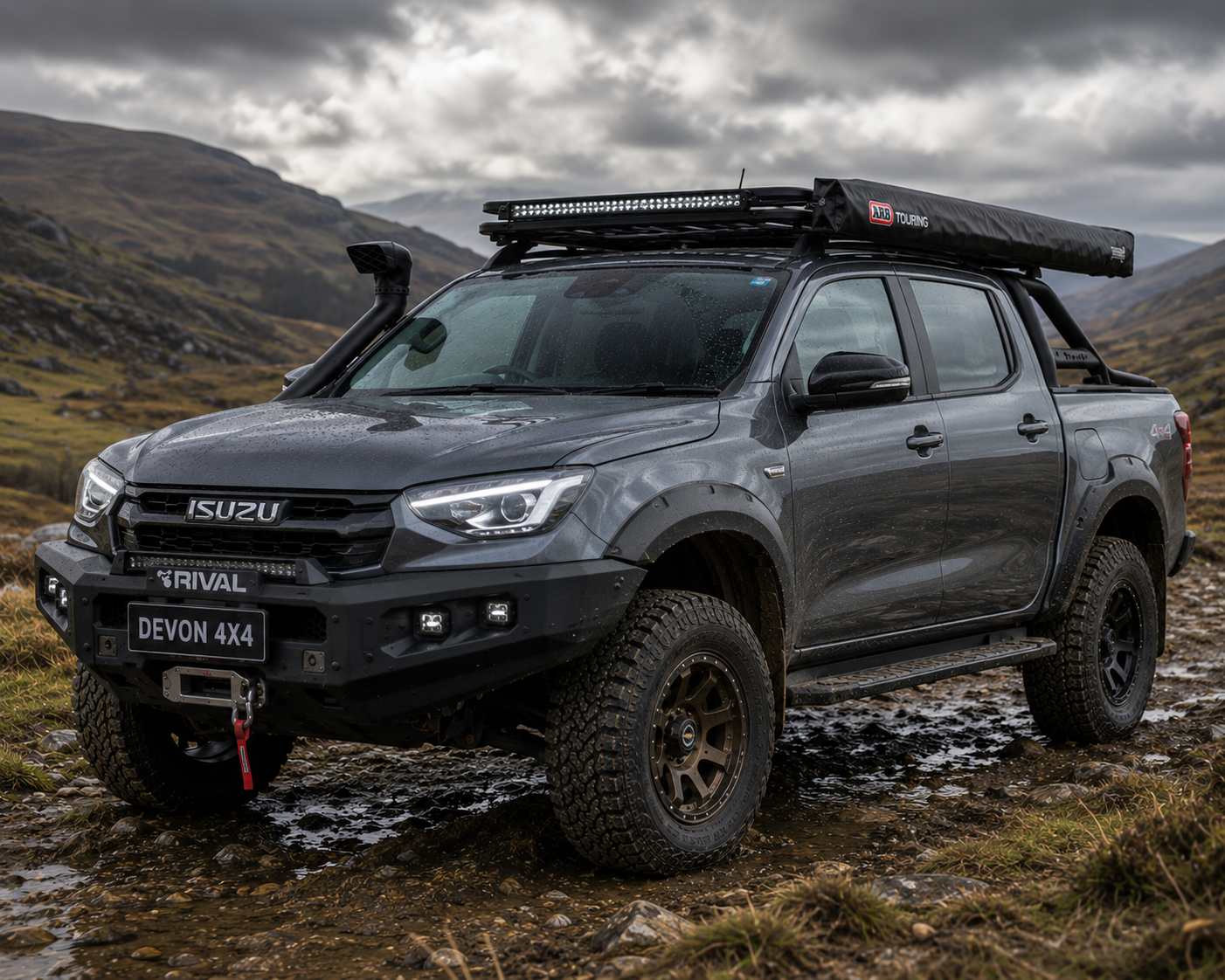
Model Overview
Isuzu D-Max Model Years Explained
The D-Max has remained strongly commercial in the UK, so payload and towing figures vary with cab style and trim.
2002–2012First-generation D-Max.
2012–2017Second generation.
2017–2021Facelifted 1.9-litre UK range.
2021 onwardsCurrent generation with extensive ADAS updates.
Important: Registration dates can overlap build changes. Always check the VIN, build date, engine, transmission, body style and fitted equipment before ordering model-specific parts.
Technical Data
Isuzu D-Max Quick Specification Table
This UK-focused table gives the main fitment and capability points useful when planning upgrades. Exact limits remain vehicle and model-year dependent.
| Specification | UK / Relevant Information |
|---|---|
| UK / relevant model groups | 2002–2012; 2012–2017; 2017–2021; 2021 onwards |
| Main engines | 3.0 diesel on early vehicles; later UK models use 2.5 then 1.9 turbo-diesel. |
| Braked towing | Up to 3,500kg on suitable UK models. |
| Wading depth | Up to 800mm on current models; earlier figures vary. |
| Wheel fitment | 6x139.7 on mainstream D-Max generations; verify hub and offset. |
| Suspension | Independent front suspension; leaf-sprung live rear axle. |
| Vehicle construction | Body-on-frame / ladder-frame utility 4x4. |
Towing, payload, roof load, wheel torque and wading figures must be confirmed against the exact vehicle handbook, compliance plate and accessory instructions. Imported vehicles can differ from UK-supplied specification.
Engine Information
D-Max Engine Model Years, Oil & Service Information
Engine families can overlap registration years, so use the VIN or engine code when selecting oil, filters or engine-specific components. This hub is for vehicle information and upgrade selection. Devon 4x4 does not list routine service parts for this make through the vehicle hub.
| Model Group | Main Engines | Identification | Oil / Service Guidance |
|---|---|---|---|
| 2002–2012 | 3.0 diesel on early vehicles; later UK models use 2.5 then 1.9 turbo-diesel. | Confirm engine code / VIN before ordering engine-specific parts or fluids. | Use the manufacturer approval and viscosity stated for the exact engine and model year. |
| 2012–2017 | 3.0 diesel on early vehicles; later UK models use 2.5 then 1.9 turbo-diesel. | Confirm engine code / VIN before ordering engine-specific parts or fluids. | Use the manufacturer approval and viscosity stated for the exact engine and model year. |
| 2017–2021 | 3.0 diesel on early vehicles; later UK models use 2.5 then 1.9 turbo-diesel. | Confirm engine code / VIN before ordering engine-specific parts or fluids. | Use the manufacturer approval and viscosity stated for the exact engine and model year. |
| 2021 onwards | 3.0 diesel on early vehicles; later UK models use 2.5 then 1.9 turbo-diesel. | Confirm engine code / VIN before ordering engine-specific parts or fluids. | Use the manufacturer approval and viscosity stated for the exact engine and model year. |
Oil capacities and approvals vary by engine code, sump, emissions equipment and service procedure. Use current manufacturer data for the exact vehicle rather than a generic internet figure.

Suspension
D-Max Suspension & Load Carrying
Independent front suspension; leaf-sprung live rear axle.
Spring and damper selection should account for permanent bumper and winch weight, underbody protection, roof equipment, drawers, tools, towing load and normal passenger/cargo use. A suspension lift does not automatically increase the vehicle's plated GVW or axle ratings.

Roof Systems
Roof Load, Roof Racks, Awnings & Roof Tents
Roof-load limits can differ by body style, roof construction, factory rails and mounting system. Treat the vehicle's dynamic roof rating as separate from any static rating quoted by a rack or tent manufacturer.
The combined weight of mounting feet, bars, platform, tent, awning and cargo must stay within the lowest-rated component. Off-road use may also require a lower working load than sealed-road use.

Load Bed
Payload, Canopies, Bed Racks & Storage
D-Max payload varies by body, trim, drivetrain, accessories and model year. Canopies, drawer systems, bed racks, roof tents, tools, passengers and trailer nose weight all consume available payload. Use the vehicle plate and actual vehicle weight rather than assuming a catalogue maximum applies to every vehicle.
Touring builds should be planned as a complete system so axle loads, suspension, roof load and towing nose weight remain within the vehicle limits.

Wheel Fitment
Wheels, Tyres, PCD & Fitment
6x139.7 on mainstream D-Max generations; verify hub and offset.
Matching the bolt pattern alone does not guarantee fitment. Check centre bore, offset, wheel width, brake clearance, spoke shape, wheel load rating, tyre size and suspension clearance for the exact vehicle.

Recovery
Front Bumpers, Winch Mounts & Recovery Points
Recovery equipment must be matched to the exact chassis, body and model year. Factory transport or tie-down points should not automatically be treated as rated recovery points.
On later vehicles, front radar, cameras, parking sensors, cooling airflow and driver-assistance calibration must be considered before fitting a bumper or discreet winch mount.

Wading
Wading Depth, Snorkels & Raised Air Intakes
Up to 800mm on current models; earlier figures vary.
A snorkel raises the engine air intake but does not waterproof the vehicle. Axle, transmission and transfer-case breathers, door seals, electronics, current, water depth and post-wading inspection all remain important.
D-Max Snorkel & Recovery Products

Protection
Chassis, Underbody Protection & Vehicle-Specific Fitment
The D-Max has remained strongly commercial in the UK, so payload and towing figures vary with cab style and trim.
Protection must match the engine, transmission, transfer case, fuel tank, exhaust and chassis layout. Added protection also consumes payload and can affect service access and cooling.
Isuzu D-Max FAQ
What years does this D-Max guide cover?
2002–2012; 2012–2017; 2017–2021; 2021 onwards.
What engines were fitted?
3.0 diesel on early vehicles; later UK models use 2.5 then 1.9 turbo-diesel.
How much can a D-Max tow?
Up to 3,500kg on suitable UK models. Always confirm the exact vehicle plate, towbar approval and gross train weight.
What is the D-Max wading depth?
Up to 800mm on current models; earlier figures vary.
What wheels fit a D-Max?
6x139.7 on mainstream D-Max generations; verify hub and offset. Offset, brake clearance and wheel load rating must also be checked.
Does a suspension lift increase payload?
No. Springs and dampers can better support a permanent load, but they do not by themselves alter the plated GVW, axle limits or legal payload.
Need Help Choosing D-Max Parts?
Send Devon 4x4 the model year, engine, transmission, body style and intended use so we can help match suspension, wheels, recovery, roof systems and protection to the correct vehicle.
Contact Devon 4x4