
Toyota Land Cruiser 80 Series Information & Upgrade Guide
UK-focused technical information for the Toyota Land Cruiser 80 Series, separated by the main UK model updates so engines, towing, suspension, wheel fitment, touring loads and upgrade advice are clear for the exact vehicle.
Model Overview
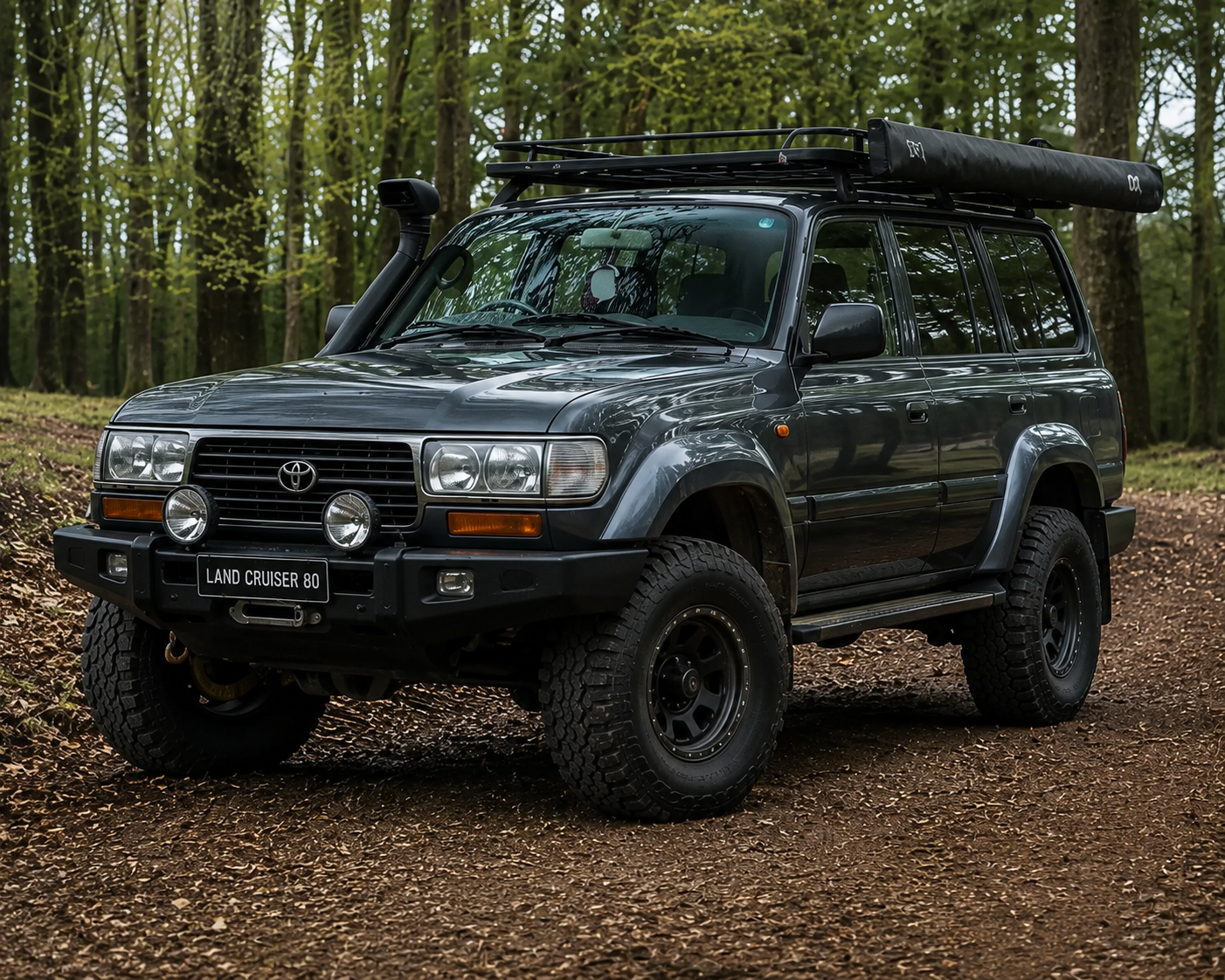
Toyota Land Cruiser 80 Series UK Model Years Explained
The 80 Series replaced the 60 Series as Toyota's large station-wagon Land Cruiser and was sold by Toyota GB from 1990 to 1997. UK specification was considerably narrower than the worldwide 80 Series range, so imported vehicles should not automatically be treated as equivalent to a UK VX or GS.
1990–1992 Land Cruiser VXUK launch model with the 4.2-litre 1HD-T 12-valve turbo-diesel, full-time four-wheel drive and five-speed manual or four-speed automatic transmission.
1992–1995 Land Cruiser VXUpdated 80 Series with revisions to styling, braking and equipment while retaining the 1HD-T 4.2 turbo-diesel and full-time four-wheel-drive layout.
1995–1997 Land Cruiser VX / GS DieselLate UK diesel models use the 24-valve 4.2-litre 1HD-FT turbo-diesel producing approximately 168bhp. The five-seat GS joined the UK range alongside the VX.
1995–1997 Land Cruiser VX PetrolToyota GB also offered the 4.5-litre 1FZ-FE 24-valve petrol engine in VX specification with automatic transmission.
Important: Imported 80 Series may use different engines, trim levels, axle equipment, brakes and specifications. Always check chassis code, engine code, transmission and build date before ordering vehicle-specific parts.
Technical Data
Toyota Land Cruiser 80 Series Quick Specification Table
This comparison concentrates on the main UK-supplied 80 Series model groups. Where Toyota GB did not publish one universal figure, the exact vehicle handbook, plate or component specification should be used.
| Specification | 1990–1992 VX | 1992–1995 VX | 1995–1997 Diesel | 1995–1997 Petrol |
|---|---|---|---|---|
| Main UK engine | 4.2 1HD-T turbo-diesel, 12 valve | 4.2 1HD-T turbo-diesel, 12 valve | 4.2 1HD-FT turbo-diesel, 24 valve | 4.5 1FZ-FE petrol, 24 valve |
| Power | Approx. 165bhp | Approx. 158bhp | Approx. 168bhp | Approx. 202bhp |
| Transmission | 5-speed manual / 4-speed automatic | 5-speed manual / 4-speed automatic | Manual and model-dependent late specification | 4-speed automatic |
| Four-wheel drive | Full-time 4WD with high / low range | Full-time 4WD with high / low range | Full-time 4WD with high / low range | Full-time 4WD with high / low range |
| Braked towing | Up to 3,500kg | Up to 3,500kg | Up to 3,500kg | Up to 3,500kg |
| Front suspension | Coil-sprung live axle | Coil-sprung live axle | Coil-sprung live axle | Coil-sprung live axle |
| Rear suspension | Coil-sprung live axle | Coil-sprung live axle | Coil-sprung live axle | Coil-sprung live axle |
| Wheel PCD | 6x139.7 | 6x139.7 | 6x139.7 | 6x139.7 |
| Centre bore | 106.1mm | 106.1mm | 106.1mm | 106.1mm |
| Typical factory tyre | 265/75 R15 in launch specification | Model dependent after wheel / brake revisions | 275/70 R16 in late Toyota GB data | 275/70 R16 in late Toyota GB data |
| Length | Approx. 4,780mm | Approx. 4,780mm | Approx. 4,820mm | Approx. 4,820mm |
| Width | Approx. 1,900mm | Approx. 1,900mm | Approx. 1,930mm | Approx. 1,930mm |
| Wheelbase | 2,850mm | 2,850mm | 2,850mm | 2,850mm |
| Fuel tank | Approx. 95L | Approx. 95L | Approx. 95L | Approx. 95L |
| Published UK wading depth | No single verified Toyota GB 80-Series figure used for this guide. Check the exact handbook and prepare the vehicle appropriately before wading. | |||
| Published UK roof load | Use the exact vehicle handbook and the lowest rated roof, gutter mounting, rack and accessory limit. | |||
Towing, axle loads, payload, wheel torque and roof load should always be confirmed against the exact vehicle plate, handbook and fitted equipment. Imports can differ significantly from UK-supplied VX and GS models.
Land Cruiser 80 Engine Model Years, Oil & Service Information
The engine table keeps useful identification and oil-capacity information separate from the broader vehicle specification. Devon 4x4 does not list routine service parts for Toyota through this vehicle hub, so this section is reference information rather than a service-parts catalogue.
| Years | Engine | Typical power | Typical oil capacity | Service guidance |
|---|---|---|---|---|
| 1990–1995 | 1HD-T 4.2 turbo-diesel | Approx. 158–165bhp depending on year | Approx. 9.3L including filter | Confirm oil grade and viscosity against the exact handbook, climate and engine specification. |
| 1995–1997 | 1HD-FT 4.2 turbo-diesel | Approx. 168bhp | Approx. 9.7L including filter | 24-valve diesel. Confirm final oil level using the correct Toyota procedure after filling. |
| 1995–1997 | 1FZ-FE 4.5 petrol | Approx. 202bhp | Approx. 7.2L including filter | Confirm the exact oil specification and refill quantity using the vehicle handbook or workshop data. |
Oil capacities can vary with sump, filter and drain procedure. Use the stated quantity as a service reference and confirm the final level correctly rather than adding the nominal capacity blindly.

Suspension
Land Cruiser 80 Suspension & Load Carrying
The 80 Series uses coil-sprung live axles front and rear, giving it a very different suspension layout from later independent-front-suspension Land Cruisers. Springs and dampers should therefore be selected specifically for the 80 Series and its actual permanent load.
Front spring choice should account for accessories such as a steel bumper, winch and underbody protection. Rear spring choice should reflect permanent touring weight such as drawers, roof equipment, tools, towing equipment and regularly carried cargo.
A suspension lift can improve clearance, load support and damping when correctly specified, but it does not automatically increase the plated gross vehicle weight or axle ratings.
Land Cruiser 80 Suspension Products
Roof Systems
Roof Load, Roof Racks, Awnings & Roof Tents
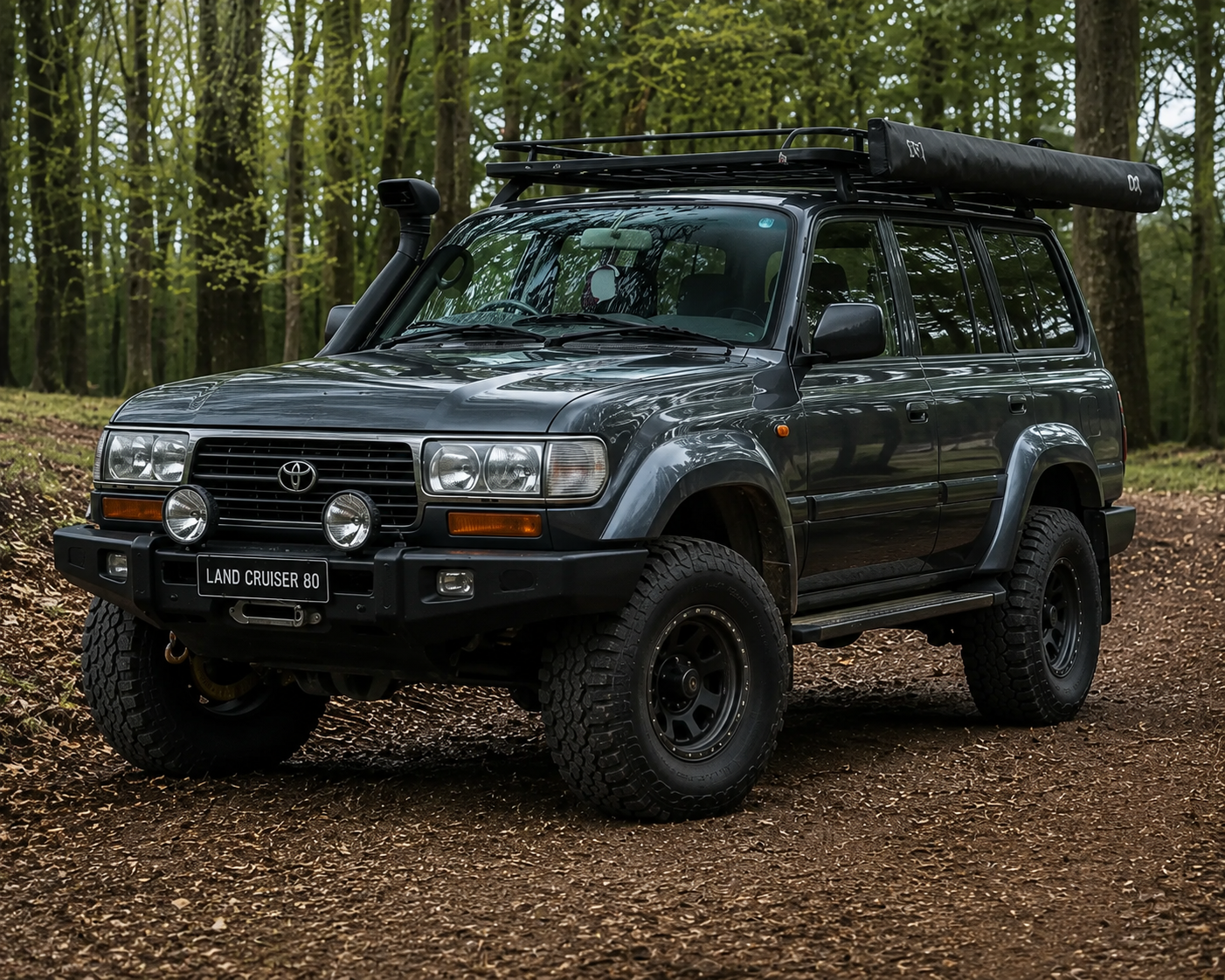
The 80 Series is commonly fitted with gutter-mounted roof systems, but the total usable roof load is governed by the vehicle, gutter mounts, rack and accessories together. Do not use the rack manufacturer's maximum capacity as the vehicle's permitted roof load.
The weight of feet, crossbars or platform, roof tent, awning, spare wheel and cargo all contributes to the load carried high on the vehicle. Off-road use can also impose substantially higher dynamic loads than normal road driving.
Land Cruiser 80 Roof & Camping Products
Land Cruiser 80 Roof RacksVehicle-filtered rack systems and platforms
Front RunnerVehicle-specific touring rack systems
ARB Roof RacksTouring and utility roof systems
Roof TentsHard-shell and folding roof tents
AwningsVehicle-mounted touring shelter
Rack AccessoriesCargo, recovery-board and accessory mounts

Load & Touring
Payload, Touring Load & Storage
The usable payload of an 80 Series depends on the exact vehicle, trim, accessories and current kerb weight. Steel bumpers, a winch, drawers, auxiliary batteries, roof racks, tents, water, fuel, passengers and trailer nose weight all consume available payload.
For an expedition or heavily equipped touring build, axle loads are just as important as total vehicle weight. Permanent accessories should be planned together with the suspension rather than added independently.

Wheel Fitment
Wheel PCD, Centre Bore & Factory Sizes
| Specification | Land Cruiser 80 Series |
|---|---|
| Wheel PCD | 6x139.7 |
| Centre bore | 106.1mm |
| Early UK factory tyre | 265/75 R15 in launch specification |
| Late UK factory tyre | 275/70 R16 in Toyota GB late-model data |
| Fitment checks | Offset, wheel width, brake clearance, spoke profile, tyre size and wheel load rating must all be checked. |
Matching the 6x139.7 bolt pattern alone does not guarantee fitment. The 80 Series uses a large 106.1mm centre bore, and brake clearance, offset and load rating are particularly important when fitting aftermarket wheels.

Recovery
Front Bumpers, Winch Mounts & Recovery Points
The 80 Series is a traditional body-on-frame 4x4, making it well suited to properly engineered winch bumpers, recovery points and underbody-mounted recovery equipment. Components still need to match the exact chassis and bumper arrangement.
Factory transport or tie-down points should not automatically be treated as rated recovery points. Winch and kinetic recoveries can impose very high loads, so mounting systems, recovery points and shackles must all be suitably rated and correctly installed.
Land Cruiser 80 Recovery Products

Wading
Wading, Snorkels & Raised Air Intakes
A single verified Toyota GB 80-Series wading-depth figure has not been used for this guide. Water crossings should therefore be planned around the exact vehicle, preparation, water depth, current and conditions rather than relying on a later Land Cruiser figure.
A snorkel raises the engine air intake but does not waterproof the vehicle. Axle, gearbox and transfer-case breathers, electrical components, door seals and post-wading inspection remain important on an older 4x4.

Protection
Chassis, Underbody Protection & Vehicle-Specific Fitment
The 80 Series uses a separate ladder-frame chassis with live axles front and rear. Underbody protection must suit the exact engine, transmission, transfer case, fuel tank, exhaust arrangement and any existing aftermarket equipment.
Steel or aluminium protection adds useful shielding around vulnerable components but also adds permanent weight. It should therefore be considered together with suspension setup, axle loads and overall touring payload.
Toyota Land Cruiser 80 Series FAQ
What years was the Land Cruiser 80 sold in the UK?
Toyota GB lists the 80 Series VX and GS from 1990 to 1997. Imported vehicles can include specifications and engines not normally supplied in the UK.
Which diesel engines were fitted to UK Land Cruiser 80 models?
Early UK vehicles use the 4.2-litre 1HD-T 12-valve turbo-diesel. The later UK range introduced the 24-valve 1HD-FT 4.2 turbo-diesel.
Was a petrol Land Cruiser 80 sold in the UK?
Yes. Toyota GB offered the 4.5-litre 1FZ-FE petrol engine in late VX specification.
How much can a Land Cruiser 80 tow?
Toyota GB period data lists up to 3,500kg braked towing. Always confirm the exact vehicle plate, gross train weight and towbar approval.
What is the Land Cruiser 80 wheel PCD?
The 80 Series uses 6x139.7 PCD with a 106.1mm centre bore. Offset, brake clearance, wheel width and load rating still need to be checked.
Does the Land Cruiser 80 have independent front suspension?
No. The 80 Series uses a coil-sprung live front axle and a coil-sprung live rear axle.
Can a suspension lift increase the Land Cruiser 80 payload?
No. Correct springs can support permanent accessory weight and improve ride height, but they do not automatically change the plated GVW or axle limits.
Can I fit a roof tent to a Land Cruiser 80?
Yes, with a suitable gutter-mounted rack or approved roof system. The complete setup must remain within the lowest applicable vehicle, mounting, rack and tent load limit.
Need Help Choosing Land Cruiser 80 Parts?
Send Devon 4x4 the model year, engine, transmission and intended use so we can help match suspension, wheels, recovery, roof systems and protection to the correct 80 Series.
Contact Devon 4x4