
Volkswagen Amarok Information & Upgrade Guide
Technical information for the Volkswagen Amarok, separated by model year and generation so towing, payload, wading, wheel fitment, roof load, engines and upgrade advice are clear for the exact vehicle.
Model Overview
Volkswagen Amarok Model Years Explained
The Amarok changed significantly during its production run. Parts, wheel fitment, towing limits, engines, body dimensions and off-road specifications should therefore be checked against the exact year and model rather than treated as one combined specification.
2010–2012 Amarok 2HEarly first-generation 2.0 TDI and BiTDI models. Braked towing is commonly listed up to 2,800kg, with 500mm wading depth and 5x120 wheel fitment.
2013–2016 Amarok 2HUpdated first-generation 2.0 TDI and BiTDI range. Selected UK models increased braked towing to 3,200kg while retaining the original 2H chassis and 500mm wading depth.
2016–2022 Amarok V6 2HFacelifted first-generation Amarok with 3.0 V6 TDI power. UK towing figures vary by year and variant from around 3,100kg to 3,500kg.
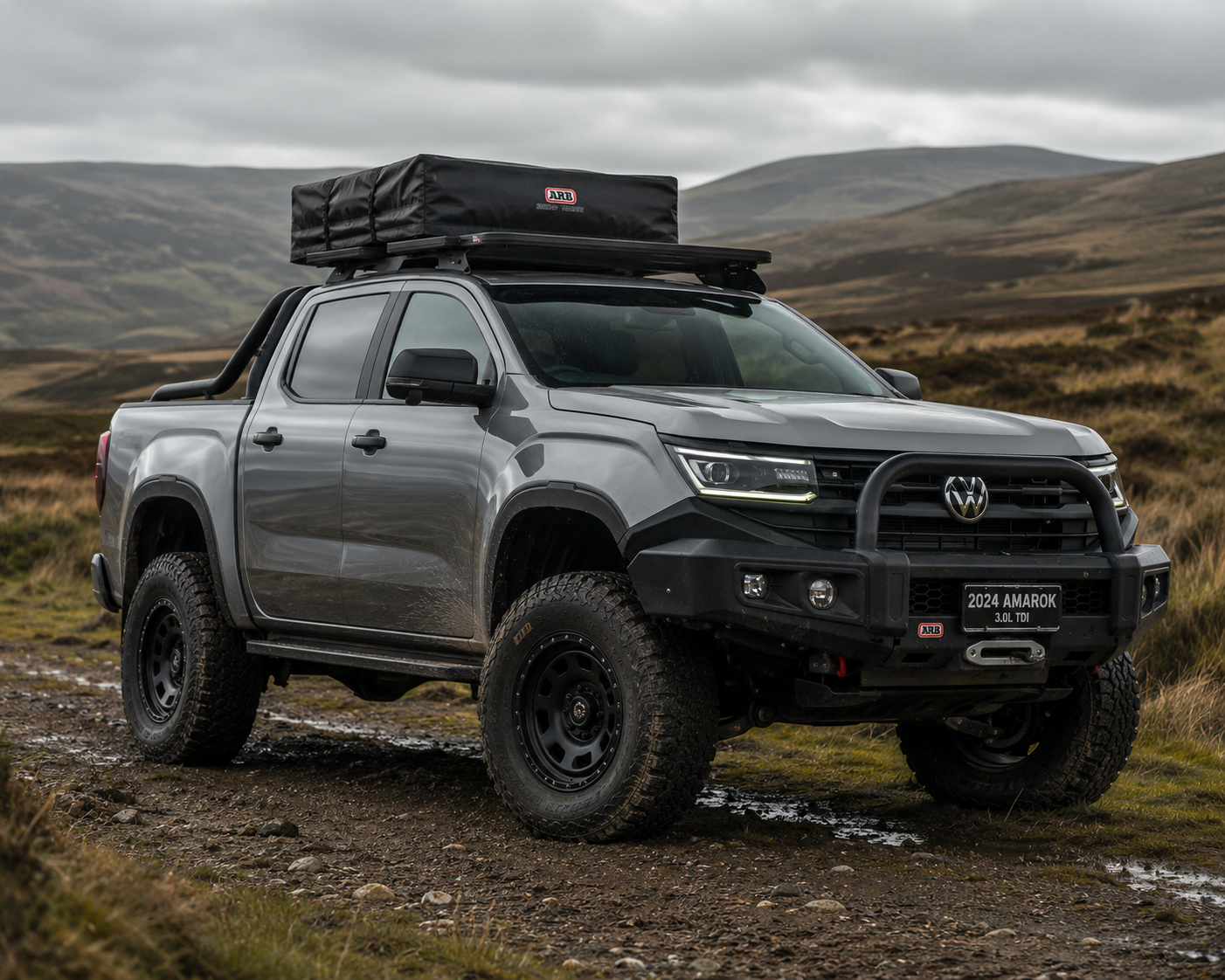
2023 onwards AmarokSecond-generation Ranger-platform vehicle with different wheels, body, chassis details and accessories. Towing is up to 3,500kg and wading depth rises to 800mm.
Important: Maximum figures are model dependent. Factory options, trim, transmission, suspension package, accessories, vehicle loading and towbar approval can reduce the usable payload or towing capacity.
Technical Data
Volkswagen Amarok Quick Specification Table
The Amarok changed throughout production, so towing, payload, roof load, wheel fitment, suspension and dimensions should be checked against the exact model year. This comparison separates the main UK model groups rather than applying one combined specification to every Amarok.
| Specification | 2010–2012 | 2013–2016 | 2016–2018 | 2019–2022 | 2023 onwards |
|---|---|---|---|---|---|
| Generation | 2H first generation | 2H first generation | 2H V6 facelift | 2H V6 facelift | Second generation |
| Main UK engines | 2.0 TDI / 2.0 BiTDI | 2.0 TDI / 2.0 BiTDI | 3.0 V6 TDI | 3.0 V6 TDI | 2.0 TDI 170PS, 2.0 BiTDI 205PS and 3.0 V6 TDI 240PS were offered at UK launch; the current UK brochure lists the 240PS V6 range |
| Typical power | Approx. 121–161bhp | Approx. 138–177bhp | Approx. 201–221bhp | Approx. 201–255bhp, with overboost on selected versions | Approx. 168–237bhp across UK launch versions; current brochure: 237bhp / 240PS V6 |
| Braked towing | Up to 2,800kg | 3,000kg with selectable 4MOTION; up to 3,200kg with permanent 4MOTION automatic | Typically up to 3,100kg in UK specifications | Typically 3,100kg; selected later 258PS versions up to 3,500kg | Up to 3,500kg |
| Maximum payload | Up to approximately 1,119kg, depending on trim and drivetrain | 1,057–1,145kg depending on engine, trim and transmission | Approx. 1,070–1,146kg depending on version | 1,030–1,147kg depending on trim and equipment | 828–1,050kg in the current UK range, depending on trim and options |
| Wading depth | 500mm | 500mm | 500mm | 500mm | 800mm |
| Dynamic roof load | 100kg | 100kg | 100kg | 100kg | 85kg using the roof-rail track system while moving |
| Static roof load | Not separately published by Volkswagen UK; use the approved rack-system limit | Not separately published by Volkswagen UK; use the approved rack-system limit | Not separately published by Volkswagen UK; use the approved rack-system limit | Not separately published by Volkswagen UK; use the approved rack-system limit | Up to 350kg when stationary, subject to the approved carrier system |
| Wheel PCD | 5x120 | 5x120 | 5x120 | 5x120 | 6x139.7 |
| Centre bore | 65.1mm | 65.1mm | 65.1mm | 65.1mm | 93.1mm |
| Typical wheel torque | Commonly 180Nm* | Commonly 180Nm* | Commonly 180Nm* | Commonly 180Nm* | Confirm the exact handbook and wheel specification |
| Front suspension | Independent double wishbone | Independent double wishbone | Independent double wishbone | Independent double wishbone | Independent double wishbone |
| Rear suspension | Leaf-sprung live axle | Leaf-sprung live axle | Leaf-sprung live axle | Leaf-sprung live axle | Leaf-sprung live axle |
| Approx. length | 5,181–5,254mm | Approx. 5,254mm | Approx. 5,254mm | Approx. 5,254mm | Approx. 5,350mm |
| Approx. width | Approx. 1,944mm excluding mirrors | Approx. 1,954mm excluding mirrors | Approx. 1,954mm excluding mirrors | Approx. 1,954mm excluding mirrors | Approx. 1,910mm excluding mirrors |
| Fuel tank | Approx. 80L | Approx. 80L | Approx. 80L | Approx. 80L | Approx. 80L |
*Wheel torque, towing, payload and roof-load figures must be confirmed against the vehicle handbook, vehicle plate, fitted wheel, towbar approval and rack-system instructions. Where Volkswagen UK did not publish one universal figure, the table states that the exact model or carrier-system data must be checked. These are reference figures rather than a replacement for VIN-specific data.
For the 2023 onwards Amarok, the UK weights table lists 85kg for the factory roof rails. Volkswagen UK separately states a 100kg roof-load limit with two approved roof carriers or 150kg with at least four, while launch material quoted up to 350kg when stationary. These figures describe different approved arrangements and must not be combined; always use the lowest applicable vehicle, mounting, carrier and accessory limit.
Amarok Engine Model Years, Engines & Service Information
The engine table below keeps the service information separate from the broader vehicle comparison, making oil capacity and oil specification easier to find without repeating towing, payload and wheel data.
| Years | Engine | Typical power | Typical oil capacity | Oil specification |
|---|---|---|---|---|
| 2010–2012 | 2.0 TDI | Approx. 121bhp | Approx. 6.5–7.0L including filter | VW-approved low-ash oil, commonly 5W-30 meeting VW 507.00. Confirm by engine code. |
| 2010–2012 | 2.0 BiTDI | Approx. 161bhp | Approx. 6.5–7.0L including filter | VW-approved low-ash oil, commonly 5W-30 meeting VW 507.00. Confirm by engine code. |
| 2013–2016 | 2.0 TDI | Approx. 138bhp | Approx. 6.5–7.0L including filter | VW-approved low-ash oil, commonly 5W-30 meeting VW 507.00. Confirm by engine code. |
| 2013–2016 | 2.0 BiTDI | Approx. 177bhp | Approx. 6.5–7.0L including filter | VW-approved low-ash oil, commonly 5W-30 meeting VW 507.00. Confirm by engine code. |
| 2016–2018 | 3.0 V6 TDI | Approx. 201–221bhp | Approx. 8.0L including filter | VW-approved low-ash oil meeting the handbook or VIN specification, commonly VW 507.00. |
| 2019–2022 | 3.0 V6 TDI | Approx. 201–255bhp, with overboost on selected versions | Approx. 8.0L including filter | VW-approved low-ash oil meeting the handbook or VIN specification, commonly VW 507.00. |
| 2023 onwards | 2.0 TDI / 2.0 BiTDI / 3.0 V6 TDI | Approx. 168–237bhp in UK-market versions | Engine dependent — confirm by VIN | Use the exact Volkswagen oil approval shown in the handbook or workshop data for the engine fitted. |
Oil capacity can vary by engine code, sump, filter and service procedure. Fill using the approved measured quantity and confirm the final level using the correct Volkswagen procedure.
Suspension
Amarok Suspension, 4Motion & Load Carrying
2010–2016 2.0 TDI / BiTDI
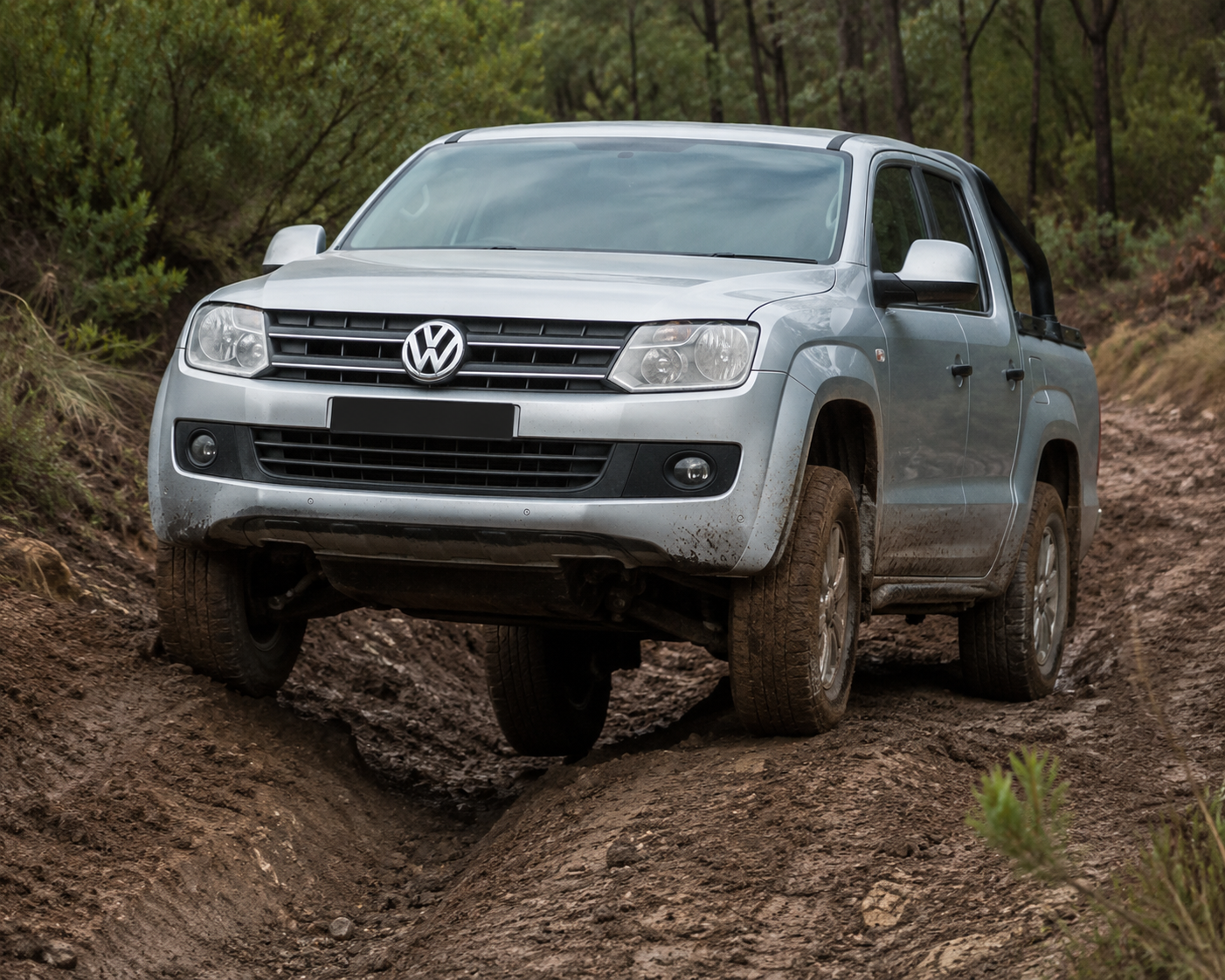
These first-generation models use independent double-wishbone front suspension and a leaf-sprung live rear axle. Depending on version, the Amarok was offered with selectable 4Motion and low range or permanent 4Motion without a conventional low-range transfer case.
2016–2022 3.0 V6 TDI
The V6 remains on the first-generation 2H chassis with independent front suspension and rear leaf springs. Spring and damper choice should account for engine weight, bumper and winch fitment, canopy weight, towing load and permanent touring equipment.
2023 onwards
The second-generation Amarok uses the Ranger-based chassis and requires generation-specific suspension components. Products intended for the 2010–2022 2H must not be assumed to fit the later vehicle.
Amarok Suspension Products
Roof Systems
Roof Load, Roof Racks, Awnings & Roof Tents
2010–2022 Amarok
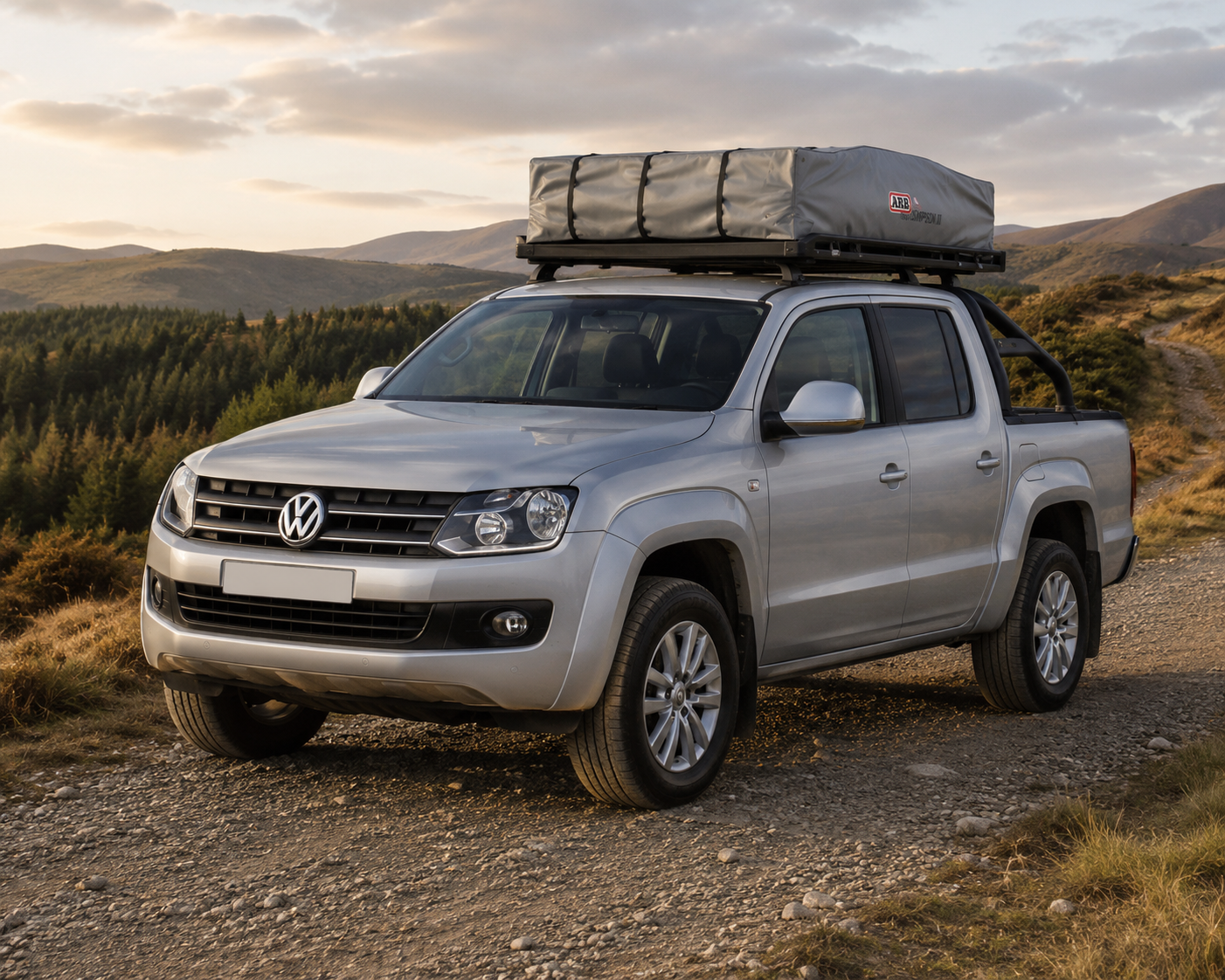
The published factory roof load is commonly 100kg. This is a dynamic on-road limit and must include the rack, crossbars and everything carried on them. Off-road rack manufacturers may specify a lower working limit.
2023 onwards Amarok
Volkswagen UK lists 85kg on the factory roof rails. Its current technical data also states 100kg with two approved roof carriers or 150kg with at least four, while launch information quoted up to 350kg when stationary. The lowest limit in the complete system always applies, including the vehicle, mounting kit, rack and tent.
Amarok Roof & Camping Products

Load Bed
Payload, Canopies, Bed Racks & Storage
2010–2016 2.0 models
Maximum payload can exceed 1.1 tonnes on suitable versions, although cab style, heavy-duty or comfort rear springs and factory equipment change the plated figure.
2016–2022 V6 models
Payload is generally around 1,070–1,154kg depending on trim and equipment. High-specification models often have a lower usable payload because added factory equipment increases kerb weight.
2023 onwards models
UK payload varies significantly by trim and factory equipment. Volkswagen UK figures range from approximately 828kg to 1,050kg in the current brochure, while earlier launch material referred to a maximum of around 1.13 tonnes. Use the payload shown for the exact vehicle and deduct the weight of the canopy, drawer system, bed rack, tent, passengers, accessories and tow-ball load.

Wheel Fitment
Wheel PCD, Centre Bore, Torque & Factory Sizes
| Specification | 2010–2022 Amarok 2H | 2023 onwards Amarok |
|---|---|---|
| Wheel PCD | 5x120 | 6x139.7 |
| Centre bore | 65.1mm | 93.1mm |
| Typical wheel torque | 180Nm — confirm handbook and wheel manufacturer | Confirm the exact handbook and wheel specification before fitting |
| Common factory diameters | 16, 17, 18, 19 and 20 inches depending on trim and brake package | 17, 18, 20 and 21 inches depending on trim and market |
| Interchangeability | The two generations use different bolt patterns and are not directly interchangeable. | |
Brake clearance, offset, wheel load rating, tyre size, suspension lift and arch clearance must all be checked. Some V6 first-generation models cannot use smaller wheel sizes that fit earlier 2.0 models.
Amarok Wheels & Tyre Equipment

Recovery
Front Bumpers, Winch Mounts & Recovery Points
2010–2016 2.0 Amarok
Use bumper, winch tray and recovery components specifically approved for the early 2H body and front structure.
2016–2022 V6 Amarok
The facelifted V6 front end differs from the early 2.0 models. Bumpers and discreet mounts must be selected for the correct grille, cooling layout, safety systems and model year.
2023 onwards Amarok
The Ranger-based vehicle requires completely different front protection and recovery equipment. Products must also account for parking sensors, radar, cameras and driver-assistance systems where fitted.
Devon 4x4 can supply compatible solutions from brands including ARB and Rival for off-road users, agriculture, utilities, agencies and commercial fleets.
Amarok Recovery Products

Wading
Wading Depth, Snorkels & Raised Air Intakes
2010–2022 Amarok
The published wading depth is approximately 500mm. This applies to a standard, correctly maintained vehicle and does not account for current, surface conditions, speed, modifications or water entering breathers and electrical components.
2023 onwards Amarok
The published maximum wading depth rises to 800mm. The figure remains conditional on correct driving technique and vehicle preparation.
A snorkel raises the engine air intake but does not waterproof the vehicle. Axle, gearbox and transfer-case breathers, door seals, wiring, recovery planning and post-wading inspection remain important.
Amarok Snorkel Products

Protection
Chassis, Dimensions & Underbody Protection
2010–2022 Amarok 2H
The first generation uses a ladder-frame chassis measuring approximately 5.18–5.25m long and around 1.94–1.95m wide, depending on body and trim. Protection products must match the engine, gearbox, transfer case and fuel-tank arrangement.
2023 onwards Amarok
The second generation is approximately 5.35m long and 1.91m wide excluding mirrors. Its Ranger-based chassis requires different underbody protection, sliders and mounting systems from the 2H.
Amarok Protection Products
Volkswagen Amarok FAQ by Model Year
How much can a 2011 Amarok tow?
Early Amarok models are commonly listed with a maximum braked towing capacity of up to 2,800kg. Confirm the plated limit for the exact vehicle.
How much can a 2014 Amarok tow?
Selected 2013–2016 Amarok models are listed up to 3,200kg braked. Transmission, drivetrain and vehicle specification affect the exact limit.
Can every V6 Amarok tow 3,500kg?
No. UK figures vary by year and version. Earlier V6 models are commonly listed around 3,100kg, while selected later 258PS models can be rated up to 3,500kg.
What is the 2023 onwards Amarok towing capacity?
The second-generation Amarok is rated up to 3,500kg braked, subject to model, loading, approved towbar and the vehicle plate.
What is the Amarok wading depth?
The 2010–2022 Amarok is published at 500mm. The 2023 onwards Amarok increases this to 800mm.
What is the Amarok wheel PCD?
The 2010–2022 Amarok uses 5x120. The 2023 onwards Amarok uses 6x139.7, so wheels do not interchange between generations.
What is the first-generation Amarok roof load?
The published dynamic roof load is commonly 100kg, including the rack and everything mounted to it.
What is the new Amarok roof load?
Volkswagen UK lists 85kg on the factory roof rails, 100kg with two approved roof carriers or 150kg with at least four. Launch material also quoted up to 350kg when stationary. Use only the figure applicable to the exact approved mounting arrangement.
Need Help Choosing Amarok Parts?
Send Devon 4x4 the model year, engine, transmission, cab style and intended use so we can help match suspension, wheels, recovery, roof systems and protection to the correct Amarok generation.
Contact Devon 4x4