
Tyre inflation
Restore pressure after off-road driving, correct normal pressure loss or inflate a repaired tyre before continuing a journey.
Learn how to choose a portable or permanently mounted 12-volt air compressor for tyre inflation, pressure adjustment, ARB Air Locker operation, air accessories and regular off-road use.
A 12-volt air compressor gives you a dependable source of compressed air away from a workshop or filling station. Its most common role is restoring road pressure after tyres have been deliberately aired down for sand, mud, rocks or rough tracks.
Lower tyre pressure can improve the tyre’s ability to conform to uneven ground and increase the size of its contact patch. Before returning to normal road speeds, those tyres must be reinflated to a suitable pressure for the vehicle, load and tyre specification.
Depending on the model and installation, a compressor may also operate ARB Air Lockers, adjust auxiliary air springs, inflate camping equipment or supply an air tank. Not every compressor is suitable for every task, so the required airflow, pressure and duty cycle must be checked before purchase.

The right compressor depends on how frequently it will be used, the volume of air required and whether it must perform more than one job.
Restore pressure after off-road driving, correct normal pressure loss or inflate a repaired tyre before continuing a journey.
Higher-output compressors reduce the time spent reinflating four large tyres after regular green-lane, beach or overland use.
Compatible on-board ARB compressors can provide the compressed air needed to activate selectable ARB Air Locking Differentials.
Some on-board systems can be configured to adjust compatible helper air springs, subject to the requirements of the air-suspension kit.
Suitable inflator accessories can be used for air beds, balls and other low-pressure items, although a high-flow inflator may be more efficient for very large-volume products.
A high-output compressor combined with an appropriate air tank can support selected pneumatic tasks, but continuous air-tool use requires careful output and duty-cycle assessment.
Both formats can provide reliable tyre inflation. The choice is mainly about convenience, installation, storage and the other air functions required.
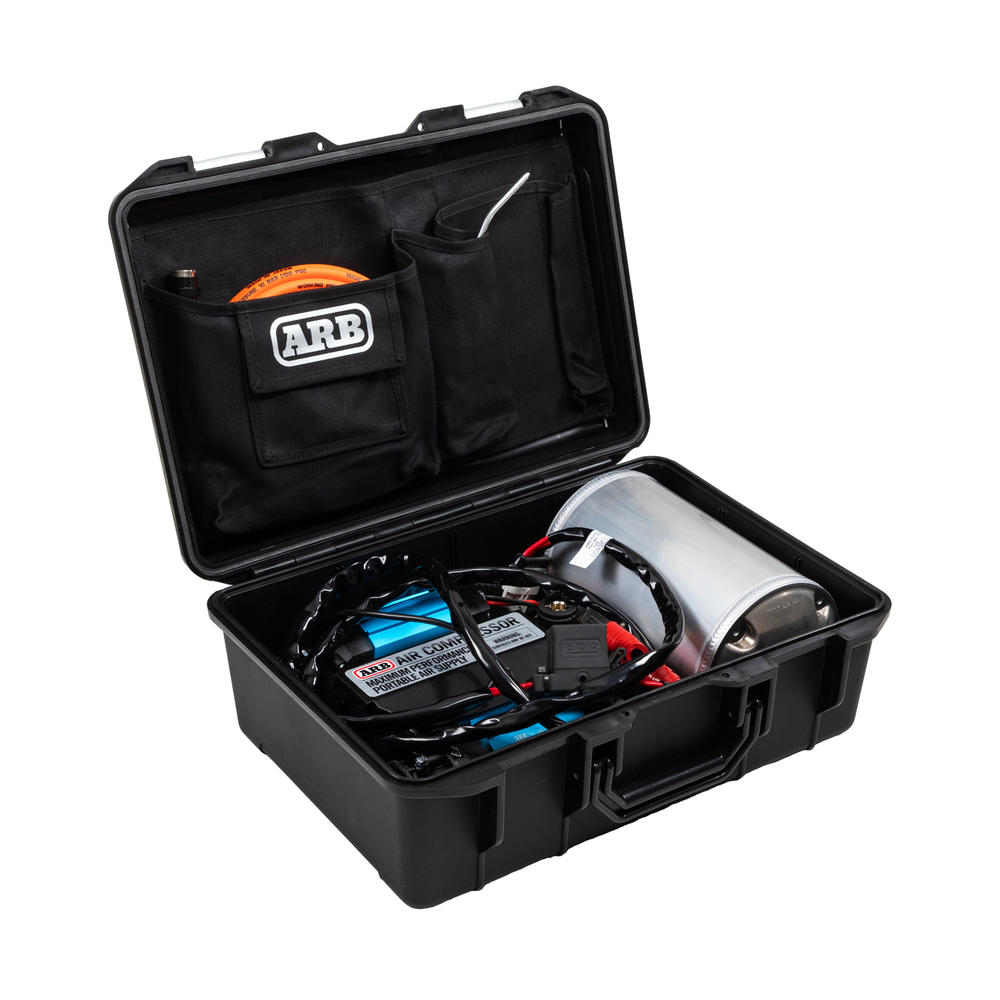
A portable compressor is normally supplied as a self-contained kit that connects directly to a vehicle battery or approved power supply. It can be moved between vehicles and stored away when not in use.
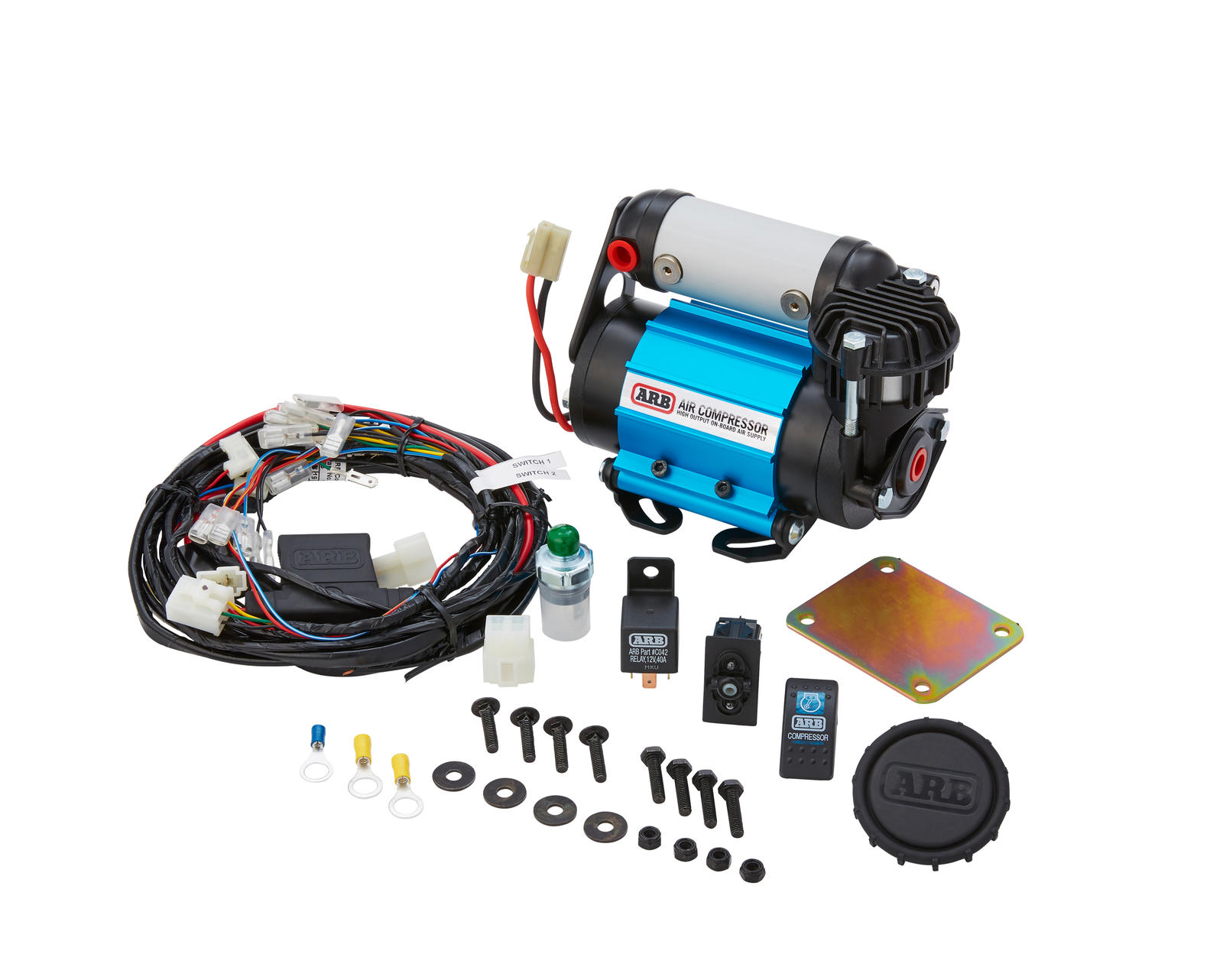
An on-board compressor is mounted securely in the vehicle and hard-wired through a suitable loom, relay, fuse and switch. It provides fast access to air and can support more complex installations.
Compressor construction affects airflow, current draw, inflation time, physical size and the amount of work it can perform before cooling is required.
A quality single-motor compressor is often sufficient for occasional tyre inflation, Air Locker operation and vehicles running moderate tyre sizes.
Larger single units provide stronger airflow while retaining a relatively compact installation, making them a practical all-round choice for many touring 4x4s.
Twin-motor compressors are designed for substantially faster inflation and more demanding use. They normally require more installation space and a higher-current electrical supply.
ARB’s brushless compressor range uses electronically controlled brushless motors and is offered in single and twin configurations for high-output on-board or portable applications.
Tyre diameter, width and target pressure all affect the volume of air required. Large off-road tyres benefit most from higher free-air delivery.
Greater output usually means greater electrical demand. Cable size, fusing, battery condition and alternator support must suit the exact compressor.
Maximum pressure alone does not tell you how quickly a compressor will inflate a tyre. Airflow under working pressure and the allowed running time are usually more useful buying criteria.
| Specification | What It Means | Why It Matters | What to Check |
|---|---|---|---|
| Free-air delivery | Airflow measured with little or no outlet restriction, normally quoted in litres per minute or cubic feet per minute. | Provides a useful headline comparison, but does not represent every real inflation condition. | Compare figures measured using the same standard and voltage. |
| Airflow under pressure | The volume delivered while the compressor is working against resistance. | More closely reflects the compressor’s performance as tyre pressure rises. | Look for airflow figures at a stated pressure where available. |
| Maximum pressure | The highest pressure the compressor is designed to produce. | Important for the intended system, but a high maximum does not guarantee fast tyre inflation. | Confirm the working pressure needed by tyres, lockers, airbags or tanks. |
| Duty cycle | The proportion of a stated time period the compressor may run before it needs to cool. | Affects how many tyres or tasks can be completed continuously. | Check the temperature and pressure conditions attached to the rating. |
| Current draw | The electrical current consumed under stated operating conditions. | Determines wiring, fuse, relay and battery requirements. | Use the manufacturer’s installation specification, not a generic cable estimate. |
| Thermal protection | A system that interrupts operation if the compressor overheats. | Helps protect the motor, but should not be used as a substitute for following the rated duty cycle. | Allow the compressor to cool and identify the cause of repeated cut-outs. |
A small inflator can advertise a high maximum pressure yet take a long time to fill a large 4x4 tyre. For regular off-road use, compare airflow, tested inflation time, duty cycle, hose quality and the compressor’s electrical requirements.
There is no single compressor size for every 4x4. The correct output depends on tyre volume, starting pressure, target pressure, frequency of use and how quickly you need the job completed.
Inflating four tyres places a much greater thermal demand on a compressor than correcting one slightly low tyre.
Large-diameter, wide or high-profile tyres contain more air and normally take longer to inflate.
Returning from a very low off-road pressure to a loaded road pressure requires more work than a small top-up.
Frequent users and groups often value a twin or brushless compressor because reduced inflation time quickly becomes worthwhile.
ARB is our principal compressor range, with portable, on-board, brushed and brushless options supported by hoses, fittings, switches, tanks and service parts.
ARB offers the broadest choice in our range, including compact Air Locker compressors, high-output single and twin compressors, portable kits and newer brushless models. ARB states that its compressors are individually leak, current-draw and flow tested under load, are rebuildable and are supported by spare parts.
Britpart XS provides straightforward portable inflation options for Land Rover, camping and general 4x4 use. The range includes single and twin-pump 12-volt compressors, plus a cordless tyre inflator for lighter pressure-adjustment work.
Terrafirma compressors offer practical portable inflation for Land Rover and general off-road use. They suit customers seeking a simple carry-in-vehicle compressor rather than a fully integrated air system.
Bushranger is a lower-priority part of our current compressor range but remains an established Australian 4x4 accessory brand. Availability may be limited, so check the specification and stock status of the exact model.
ARB supports its compressors with inflation hoses, pressure-control equipment, fittings, tanks, switches, manifolds and replacement components for creating a complete system.
Match the compressor to the tyre size, frequency of use, required inflation speed, installation format and any Air Locker, air-spring or tank functions.
ARB’s range covers compact compressors designed primarily for Air Locker activation, higher-output single compressors for tyre inflation and Air Lockers, and twin compressors for users who want maximum inflation performance or a more capable on-board air system.
Portable ARB kits are designed to provide the compressor, power connection, air hose and inflation equipment in a transportable package. On-board models can be installed with vehicle-specific or universal mounting solutions and connected to outlets, manifolds, tanks and Air Locker solenoids.
ARB also offers brushed and brushless compressor families. Do not assume that every mounting kit, pressure switch, hose or wiring loom fits every generation; order accessories for the exact compressor part number.
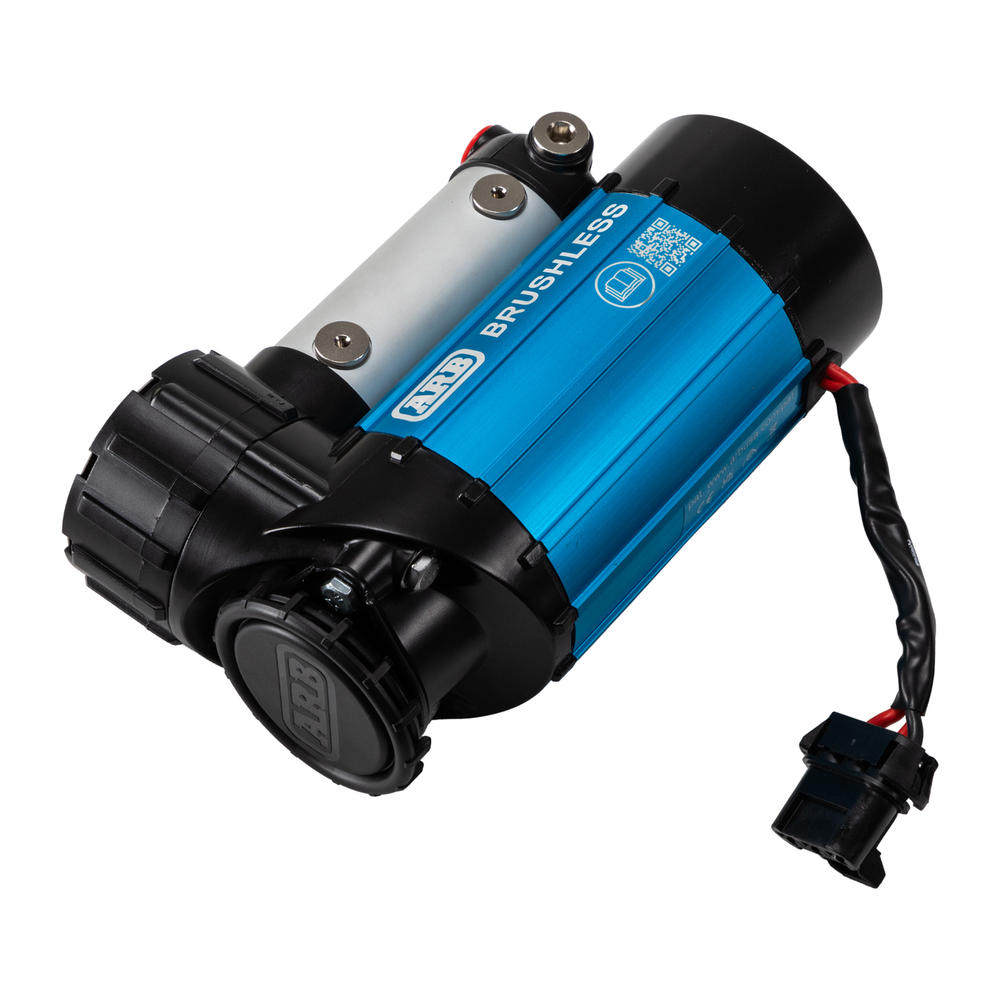
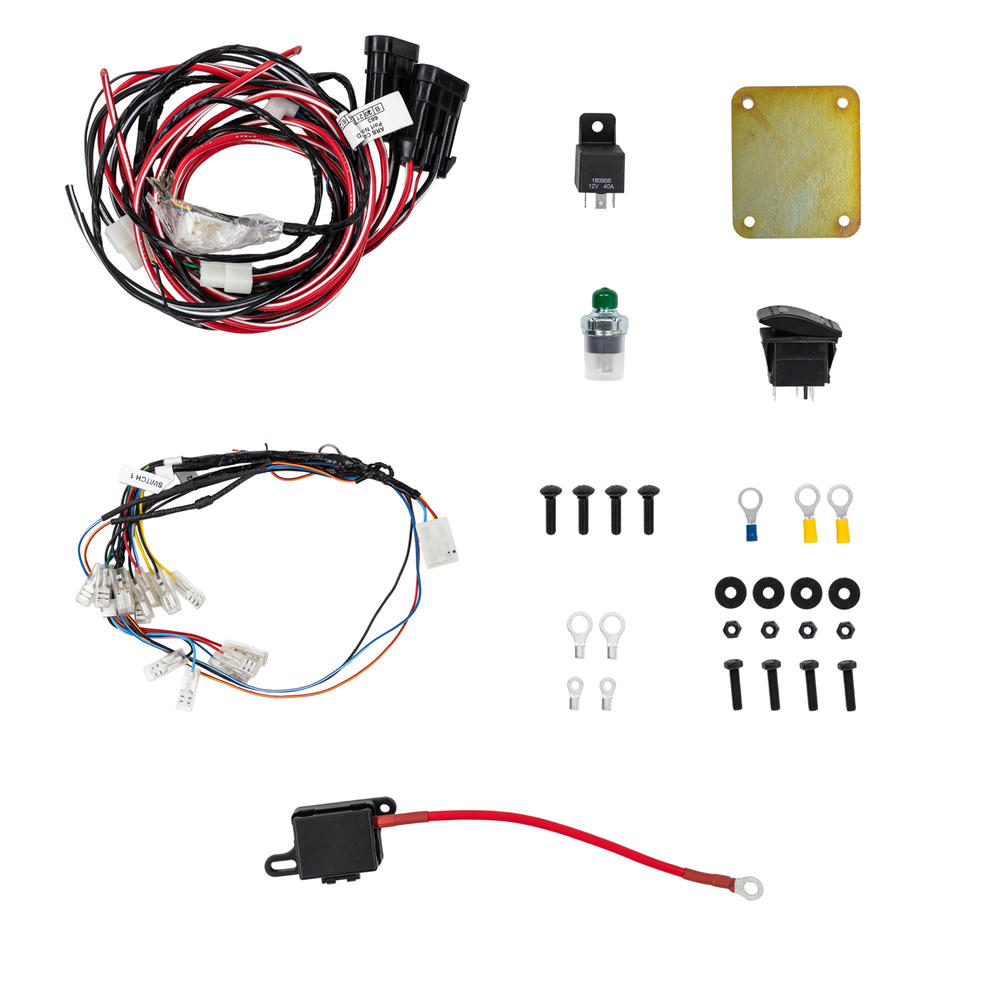
The compressor is only one part of the system. Check what is included and add the correct fittings, controls and protection for the intended installation.
Must be long enough to reach every tyre without rubbing against hot, sharp or moving components.
Allows pressure to be added, checked and released using a compatible fitting and suitable pressure range.
Controls compressor operation within a specified pressure range in compatible on-board systems.
Stores a limited reserve of compressed air and can smooth demand, but must be correctly rated, mounted and protected.
Distribute air to outlets, Air Locker solenoids, pressure switches and other approved system components.
Provides a secure, serviceable installation and may be designed for a specific vehicle and compressor.
Must match the compressor’s current demand and the intended control arrangement.
Works alongside a compressor to reinflate a suitable repaired tubeless tyre after a minor puncture.
A permanently installed compressor must be mounted to a rigid structure using the specified hardware. The location must allow ventilation, keep terminals and air connections accessible, and protect the unit from direct water, mud, exhaust heat and impact.
High-output compressors draw substantial current. The power cable, earth return, fuse, relay, switch and battery connection must follow the manufacturer’s instructions for the exact model. Undersized cable or poor terminals create voltage drop, heat and unreliable performance.
Air lines should be routed away from sharp edges, heat sources, moving suspension and areas where cargo can crush them. Any air tank must be pressure-rated, securely mounted and fitted in accordance with its instructions.
Use the loom, fuse rating, cable size and installation method specified for the exact compressor. Twin and brushless compressors may have very different electrical requirements from compact Air Locker units.
Compressed air, hot compressor components and vehicle electrical systems can cause injury or damage. Follow the instructions supplied with the compressor and tyre equipment.
Check power leads, hoses, fittings, gauges and the tyre valve before switching the compressor on.
Place portable units on firm ground away from standing water, traffic, loose clothing and combustible material.
Do not leave inflation unattended. Check pressure regularly and avoid touching hot compressor heads or hose fittings.
Stop and allow cooling when required. Repeated thermal cut-out indicates excessive demand, restricted airflow or another fault.
Use a reliable gauge and the correct pressure for the tyre, vehicle load and operating conditions. Never inflate a visibly damaged tyre, hose or tank, and keep people clear if a tyre bead is being seated by a trained operator.
Compressors used off road are exposed to dust, vibration, heat and moisture. Inspect portable equipment before each trip and check permanently installed systems during routine vehicle servicing.
Keep the air intake filter clean and replace it when required. Check hoses for cuts, hardening, heat damage and leaks, and make sure electrical terminals and mounting fasteners remain clean and tight.
ARB states that its compressors are rebuildable and that spare parts are available. Use parts intended for the exact model and follow the manufacturer’s service information.

Start with the tyres and intended use, then select the required output, installation format and accessories.
Large-volume tyres and four-tyre inflation favour a higher-output compressor.
Occasional emergency top-ups place less demand on a compressor than weekly off-road pressure changes.
Portable suits flexibility; on-board suits instant access, Air Lockers and integrated air systems.
Do not rely only on maximum PSI or free-air delivery.
Confirm it can complete the expected work without excessive cooling pauses.
Battery condition, cable size, fuse rating and current draw must suit the compressor.
Hose, gauge, fittings, switch, manifold, mount and tank may be separate items.
For regular use, consider spare parts, filters, replacement hoses and long-term repairability.
Straightforward answers to common questions about output, installation, tyre inflation and ARB air systems.
There is no universal size. Consider tyre volume, the pressure increase required, how many tyres will be inflated, acceptable inflation time and frequency of use. A quality single compressor can suit many vehicles, while large tyres and frequent use benefit from twin or high-output brushless models.
No. Maximum pressure shows the upper pressure capability, but airflow under working pressure and duty cycle have a greater effect on how quickly and repeatedly a compressor can inflate 4x4 tyres.
Choose portable when you want to move the compressor between vehicles and avoid installation. Choose on-board when you want instant access, fixed outlets, an air tank, air-spring adjustment or ARB Air Locker operation.
ARB offers compressors intended for Air Locker activation, but the correct pressure switch, manifold, solenoids, wiring and installation components must be used. Check the exact compressor model and locker installation requirements.
Not for normal tyre inflation or a basic Air Locker installation. A tank can provide a reserve of air and support selected accessories, but it adds cost, weight, plumbing and installation requirements.
Some high-output systems with a suitable tank can operate selected low-demand tools for limited periods. Compare the tool’s airflow consumption with compressor output and duty cycle; most small tyre inflators are not designed for sustained workshop air-tool use.
Many high-current compressors are intended to be used with the engine running so the charging system can support battery voltage, provided the vehicle is outdoors and safely positioned. Follow the compressor and vehicle instructions.
Compressing air generates heat, particularly near the compressor outlet and fittings. Allow components to cool before handling and stop if heat appears excessive, the hose is damaged or the thermal protection operates repeatedly.
A twin compressor provides substantially greater airflow than a single unit, reducing inflation time for large tyres and supporting more demanding on-board air systems. It also requires more space, heavier wiring and a suitable electrical supply.
They can provide practical portable tyre inflation when the exact model’s output, duty cycle, hose and power requirements suit the vehicle. For frequent inflation of large tyres, compare tested performance against ARB’s higher-output options.
Browse our compressor range or speak to Devon 4x4 for help comparing ARB portable, on-board, single, twin and brushless systems with Britpart XS, Terrafirma and Bushranger alternatives.