
Touring equipment
Carry recovery boards, storage cases, awnings and lightweight camping equipment outside the cabin.
Choose the right roof bars, platform rack or expedition rack for touring, overlanding, work and everyday use. This guide covers vehicle roof limits, static and dynamic loads, mounting systems, rooftop tents, awnings, accessories and leading brands including Front Runner, Rhino-Rack, RIVAL, Safety Devices and Britpart.
A roof rack creates an external load-carrying area for equipment that is awkward, dirty or too large to store safely inside the vehicle. Depending on the system, it may carry luggage boxes, ladders, bicycles, kayaks, recovery boards, awnings, rooftop tents and expedition accessories.
The correct rack must suit the vehicle’s roof construction, approved mounting points and permitted roof load. It must also suit the type of equipment being carried. A pair of cross bars may be ideal for a roof box or kayak, while a full platform provides more mounting positions for mixed touring equipment.
A rack should never be chosen from tray capacity alone. The vehicle manufacturer’s roof limit, the mounting kit, the rack itself and each accessory all form part of the load path. The lowest applicable limit governs the installation.

The best roof-rack system solves a specific carrying problem without adding unnecessary weight, height or drag.
Carry recovery boards, storage cases, awnings and lightweight camping equipment outside the cabin.
Create a compatible mounting base for a tent while keeping the vehicle’s internal load space free.
Transport ladders, pipe, timber and long equipment using a properly rated commercial system.
Use dedicated carriers for bicycles, kayaks, canoes, skis, boards and other bulky equipment.
Add a roof box or luggage space when passenger seating leaves limited room inside the vehicle.
Separate wet, muddy or infrequently used equipment from passengers and interior storage.
Each format has a different balance of weight, usable area, accessory support and everyday practicality.

Cross bars provide two or more transverse mounting points for compatible carriers and boxes. They are often the lightest and least intrusive option.
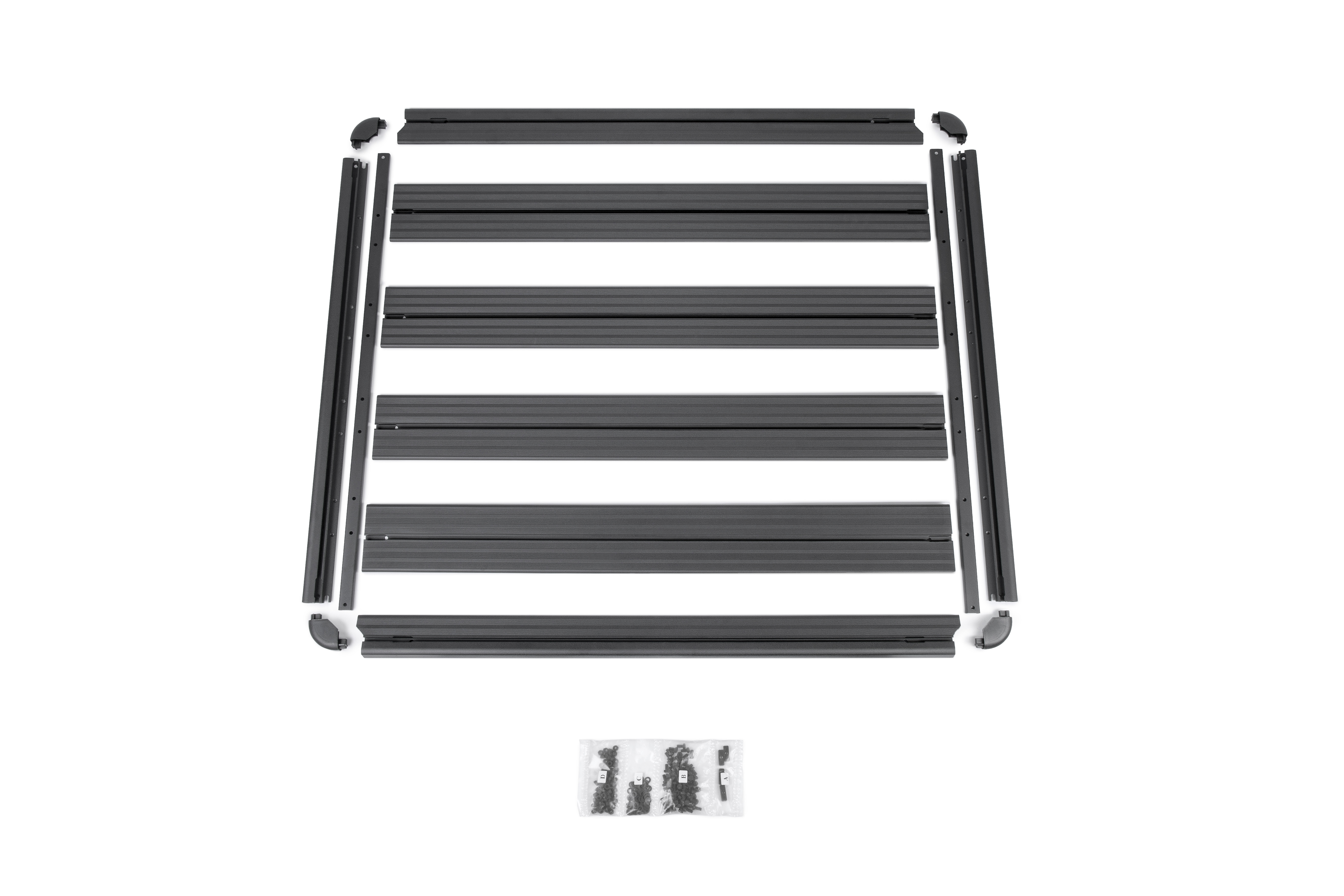
A platform provides a broad, flat mounting surface with channels or slats for positioning accessories across more of the roof.

Expedition racks commonly use a steel framework, raised perimeter rails and vehicle-specific gutter, body or roll-cage mounting.

A separate tray mounted to cross bars can add luggage containment without committing to a permanent full-length platform.
The rack may be physically capable of carrying more than the vehicle is approved to carry. Always follow the lowest limit in the complete system.
The rack’s own weight uses part of the vehicle’s permitted roof load. A 30kg rack fitted to a vehicle with a 75kg dynamic roof limit leaves no more than 45kg for compatible accessories and cargo, subject to every other applicable limit.
Front Runner specifically advises users to refer to the vehicle manufacturer’s safe roof-load guidance, even though the rack tray itself may withstand a greater load. The same principle applies to every brand and mounting system.
Dynamic roof load is the mass permitted while the vehicle is moving. It includes the rack, mounts, accessories and cargo. Braking, cornering, vibration and uneven terrain create additional forces, which is why the moving limit is critical.
Static load describes the roof load while the vehicle is parked. This is relevant to rooftop tents because occupants add weight only after the vehicle has stopped. A greater static capacity must never be used to justify exceeding the dynamic limit while travelling.
Static capacity is not always published as a simple vehicle figure. The vehicle, rack, tent and mounting-system manufacturers must all permit the intended installation. Never assume a generic multiplier without evidence for the specific vehicle and system.
While driving, the tent, rack and mounts must remain within the dynamic roof limit. When parked, the complete system must also support the tent and occupants within the approved static limits.

Material affects rack weight, corrosion behaviour, shape and repairability, but design and mounting quality matter just as much as the raw material.
| Material | Advantages | Points to Consider | Typical Systems |
|---|---|---|---|
| Aluminium | Lower system weight, strong corrosion resistance and well suited to modular extruded platforms. | Usually higher purchase price; damaged extrusions or cast components may require replacement rather than simple repair. | Front Runner Slimline II, Rhino-Rack Pioneer and RIVAL modular racks. |
| Steel | Traditional expedition construction, robust tubular frameworks and easier local fabrication in some situations. | Higher weight consumes more of the vehicle’s roof allowance and damaged coatings require attention to prevent corrosion. | Safety Devices and selected Britpart Land Rover expedition racks. |
Rhino-Rack highlights the weight saving of aluminium compared with traditional steel designs. The exact benefit depends on the compared products, but the principle is important: every kilogram of rack is one kilogram that cannot be used for cargo.
A rack is only as suitable as the parts connecting it to the vehicle. Use the exact kit approved for the model, body style and production year.
Feet clamp around factory rails with a visible gap beneath them. Some systems install without drilling.
Vehicle-specific feet or adapters connect to rails that sit close to the roof surface.
Hidden or exposed threaded positions accept dedicated feet, rails or backbone structures.
Traditional gutter legs suit vehicles such as classic Land Rover Defenders and selected commercial models.
A reinforced vehicle-specific structure distributes rack loads through approved body locations.
Selected Safety Devices systems can connect to compatible external cage structures rather than relying solely on the roof skin.
A no-drill kit still depends on the correct vehicle rails or factory mounting points. Model year, roof type, wheelbase, cab style, sunroof and body configuration can change compatibility.
A full-length platform maximises mounting area but adds weight and may extend over sections of roof that cannot accept direct mounting. A shorter rack can be lighter, quieter and better suited to a sunroof or occasional use.
Width should provide useful cargo space without creating excessive side overhang. The rack must not obstruct doors, aerials, tailgates or other moving components, and the fitted height must suit garages, car parks, ferries and low branches.
Roof shape and approved mounting span determine where feet or rails can be positioned. Do not move structural mounts simply to suit an accessory unless the rack manufacturer permits it.

Devon 4x4 offers systems ranging from low-profile modular aluminium platforms to traditional Land Rover expedition racks.
Slimline II systems combine a slatted aluminium platform, wind deflector and vehicle-specific mounting hardware for touring, work and overland builds.
Pioneer platforms use low-profile aluminium construction and modular channels for sports, trade, touring and camping accessories.
Modern modular aluminium platforms designed for SUVs and pickups, with flexible mounting options for recreational and touring equipment.
Traditional steel expedition racks for selected Defender and Discovery models, including gutter, body and compatible roll-cage mounting options.
Practical roof bars, baskets, expedition-style racks, ladders and carrying accessories for selected Land Rover applications.
| Brand | Typical Style | Best Suited To | Key Buying Consideration |
|---|---|---|---|
| Front Runner | Modular aluminium slatted platforms | Overlanding, touring and accessory-heavy builds | Select the exact tray length and vehicle-specific mounting kit. |
| Rhino-Rack | Pioneer platforms, cross bars and trade systems | Mixed leisure, work, sports and touring use | Match the platform or bars to the correct feet, rails or Backbone. |
| RIVAL | Modern modular aluminium platforms | Lightweight touring and recreational builds | Check vehicle application and available accessory mounts. |
| Safety Devices | Traditional steel expedition racks | Defender and Discovery expedition projects | Confirm gutter, body or compatible roll-cage mounting. |
| Britpart | Roof bars, baskets and Land Rover expedition accessories | Practical Land Rover work and touring setups | Check exact roof length, body style and required fitting hardware. |
No. The tent, rack, mounting bars or platform, vehicle roof and fitting hardware must all be compatible. Check the tent’s packed mass, mounting-rail spacing, required support-bar spacing and attachment method.
Some tents mount directly to platform slats or accessory brackets, while others require cross bars. The tent base must be supported in the positions specified by its manufacturer and the fasteners must remain accessible for inspection.
Consider opening direction, ladder position, tailgate clearance, awning position and whether the tent obstructs aerials, solar panels or other accessories. The complete travelling mass must remain within the dynamic roof limit.

Use purpose-designed mounts and place accessories so that weight remains controlled, the vehicle can be accessed safely and all fasteners can be inspected.
Side brackets attach compatible awnings to platform channels or rack rails. Check door, tailgate and tent clearance.
Dedicated pins or brackets keep boards accessible without relying on straps that can loosen or deteriorate.
Use weather-resistant boxes with positive mechanical restraint. Heavy tools are usually better carried low inside the vehicle.
Only use approved containers and mounts. Consider legal restrictions, total mass, heat and the effect of liquid movement.
Roof-mounted bike carriers free the towbar but increase vehicle height and may be difficult to load on a tall 4x4.
Use shaped supports or cradles and secure the load as directed, including bow and stern restraint where required.
Position lighting to manage bonnet glare, wind noise, wiring protection and road-use requirements.
Mechanical clamps keep long tools secure and accessible. Lockable mounts can improve security.
Keep roof loads light, compact and secure. Heavy equipment should normally stay low and inside the vehicle wherever practical.
Include the rack, feet, awning, tent, brackets, boxes and every item of cargo.
Place tools, water, fuel and other dense items inside the vehicle when possible.
Avoid concentrating weight at one end or outside the supported rack area.
Use rated mounts and straps suitable for the load, route and weather conditions.
Raising the centre of gravity can increase body roll and affect braking, steering and stability. Reduce speed and allow additional margin on bends, rough tracks and side slopes.
Any external rack changes airflow around the vehicle. Noise and fuel use depend on rack shape, vehicle shape, speed, accessory position and the cargo being carried.
Low-profile platforms and aerodynamic cross bars are designed to manage airflow, while wind deflectors or vehicle-specific fairings can reduce turbulence on some systems. Poorly positioned slats, exposed brackets and loose straps may whistle or vibrate.
Remove unnecessary carriers and cargo when not in use. A clear empty rack will generally create less drag than one carrying boxes, tents, upright bicycles or irregular equipment.

Follow the instructions supplied with the exact rack and vehicle mounting kit. Incorrect positioning or tightening can damage the vehicle or reduce load security.
Check tray, slats, feet, rails, clamps, spacers, fasteners and vehicle-specific fitting parts before assembly.
Clean contact areas and use supplied pads, seals, isolators and corrosion protection exactly as instructed.
Under-tightening can allow movement; over-tightening can damage threads, rails, clamps or vehicle panels.
Where drilling is required, protect bare metal and use the approved sealing method to prevent water entry and corrosion.
Open doors, tailgates, sunroofs and tents fully before finalising bracket positions.
Check fasteners after the initial journey and at the intervals stated by the rack manufacturer.
Regular inspection is especially important after rough roads, heavy weather, low branches and repeated accessory changes.
Inspect feet, rails, clamps and rack connections at the specified intervals.
Look for witness marks, fretting, loose channels, shifted feet or damaged seals.
Wash the rack, channels and mounting points after winter roads, beaches or muddy tracks.
Repair chips on steel components before corrosion spreads beneath the finish.
Replace frayed webbing, cracked plastics, distorted brackets and corroded fasteners.
Reducing permanent roof weight and drag can improve everyday practicality.
Start with the vehicle and intended load, then select the lightest system that safely provides the required mounting area.
Confirm model, production year, wheelbase, body style, roof rails, sunroof and factory mounting points.
Use the vehicle manufacturer’s guidance and check whether off-road reductions apply.
Include tents, awnings, boxes, carriers, lights and their mounting brackets.
Add rack, mounting system, accessories and cargo before comparing with the limit.
Select cross bars, a platform, tray or expedition rack according to the load.
Use only the approved feet, rails, brackets or cage connections for the vehicle.
Allow for car parks, garages, ferries, trees and barriers with every accessory fitted.
Make sure equipment can be loaded, tied down, locked and inspected safely.
Practical answers to common questions about roof limits, tents, accessories and fitment.
Use the vehicle manufacturer’s permitted roof load and include the weight of the rack, mounts, accessories and cargo. The lowest rating among the vehicle, rack, mounting kit and accessory system applies.
Dynamic load applies while driving. Static load applies while parked. A rooftop tent may add occupant weight only when stationary, but the tent, rack and mounts must remain within the dynamic limit while travelling.
Many tents can mount to suitable cross bars, provided the bars, spacing, feet and vehicle roof are approved for the complete load. Follow the tent and rack manufacturers’ mounting instructions.
A platform offers more mounting positions and suits mixed touring accessories. Cross bars are lighter and often better for a roof box, bicycle carrier or kayak used occasionally.
They can. The effect depends on speed, rack shape and the cargo or accessories fitted. Removing unused boxes, carriers and other equipment reduces unnecessary drag.
Whistling can result from airflow across slats, channels, exposed fasteners or straps. Check assembly position, channel infills and wind deflector fitment against the manufacturer’s instructions.
Only use approved containers and secure mounts, and consider legal, safety and handling implications. Liquids are heavy, so carrying them low inside the vehicle is often preferable.
Only where the rack, floor panels, mounting system and vehicle manufacturer permit it. Concentrated foot loads differ from evenly distributed cargo, so do not assume every slatted platform is a walking surface.
Heavy items such as winch kits, tools, jacks and dense spares are generally better carried low and securely inside the vehicle. Recovery boards and lightweight bulky items are more suitable roof loads.
A ladder can improve access on tall vehicles, but it must be compatible with the vehicle and rack. Never climb on tyres, door latches or unstable equipment to reach the roof.
Sometimes, but channel size, bolt type, slat spacing and load approval vary. Use an approved adapter or obtain confirmation from the relevant manufacturers rather than assuming compatibility.
Follow the manufacturer’s inspection interval, recheck after initial installation and inspect after rough roads or heavy use. Stop using the rack if any mount becomes loose or damaged.
Match the rack, vehicle-specific mounting kit, roof-load limit and intended accessories before ordering. Devon 4x4 can help you select a compatible system from Front Runner, Rhino-Rack, RIVAL, Safety Devices and Britpart.