
1
Independent recovery
They allow a driver to attempt a controlled self-recovery without waiting for another vehicle to provide a tow or winch pull.
Recovery boards are one of the simplest ways to regain traction when a 4x4, pickup, van, camper or working vehicle becomes stuck in mud, sand, snow or other loose ground. This guide explains how they work, how to use them correctly and how to choose the right set for your vehicle.
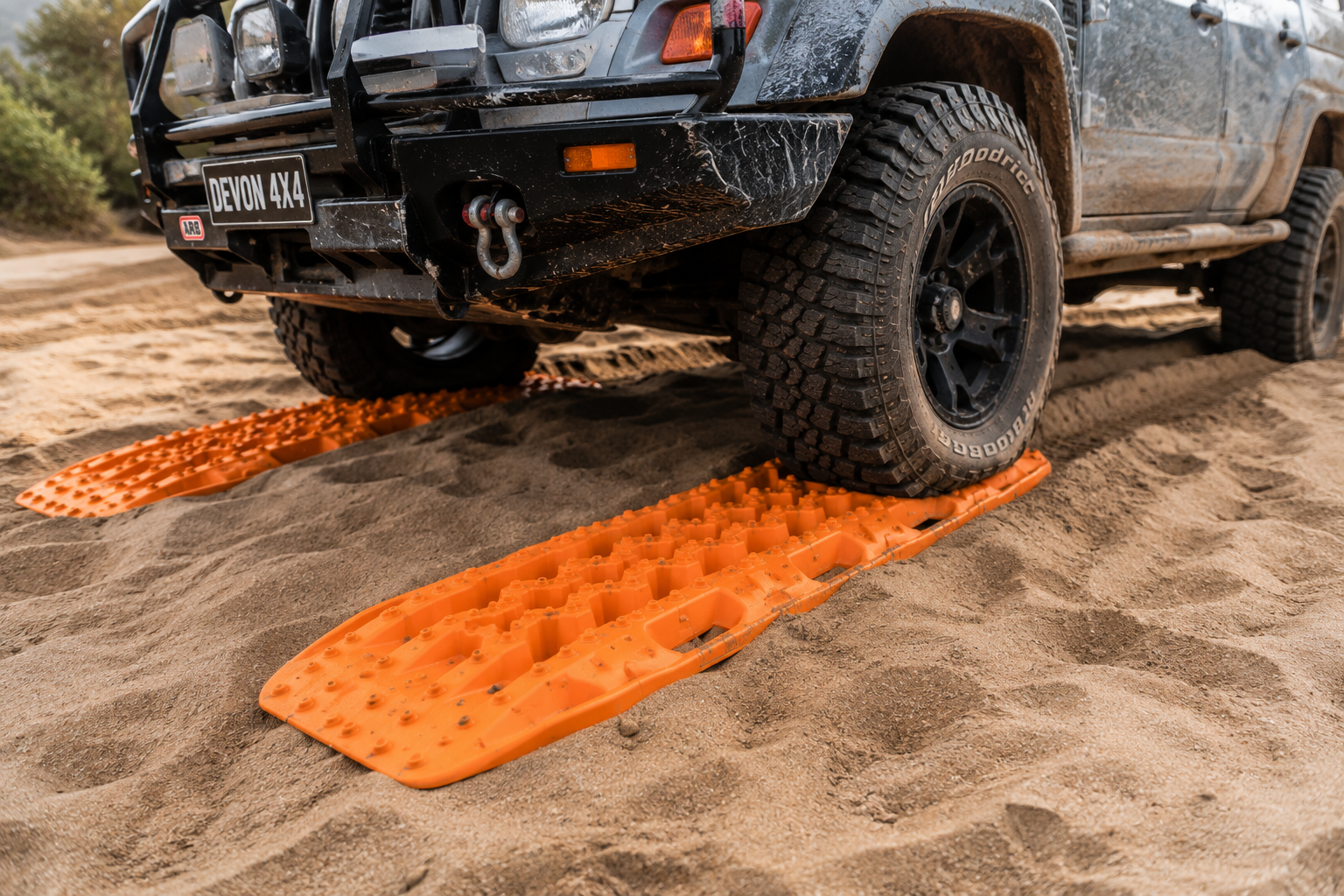
Recovery boards, also called traction boards, recovery tracks or sand ladders, are portable boards designed to give a vehicle's tyres a firm, grippy surface when the surrounding ground cannot provide enough traction.
Their upper surface normally features aggressive teeth, nodules or cleats that engage with the tyre tread. The underside is shaped to bite into mud, sand, snow or loose soil rather than simply sliding away as the vehicle moves.
Most modern recovery boards can also be used as a digging aid. Their tapered or shovel-shaped ends help remove material from around a buried tyre before the board is pushed firmly underneath it.
Unlike a tow rope, kinetic recovery rope or winch, recovery boards do not normally require another vehicle or a suitable anchor point. That makes them especially useful for solo travel, green laning, overlanding, working vehicles and remote journeys.
Recovery boards are popular because they are mechanically simple, easy to understand and can be deployed without attaching a recovery line to another vehicle.
They allow a driver to attempt a controlled self-recovery without waiting for another vehicle to provide a tow or winch pull.
Once the tyres have been cleared, a pair of boards can be positioned and used within minutes without complicated rigging.
Quality traction boards can help vehicles regain movement in sand, mud, snow, loose gravel and slippery campsite or event fields.
Recovery boards are generally lightweight, stackable and compatible with roof-rack, spare-wheel and load-bed mounting systems.
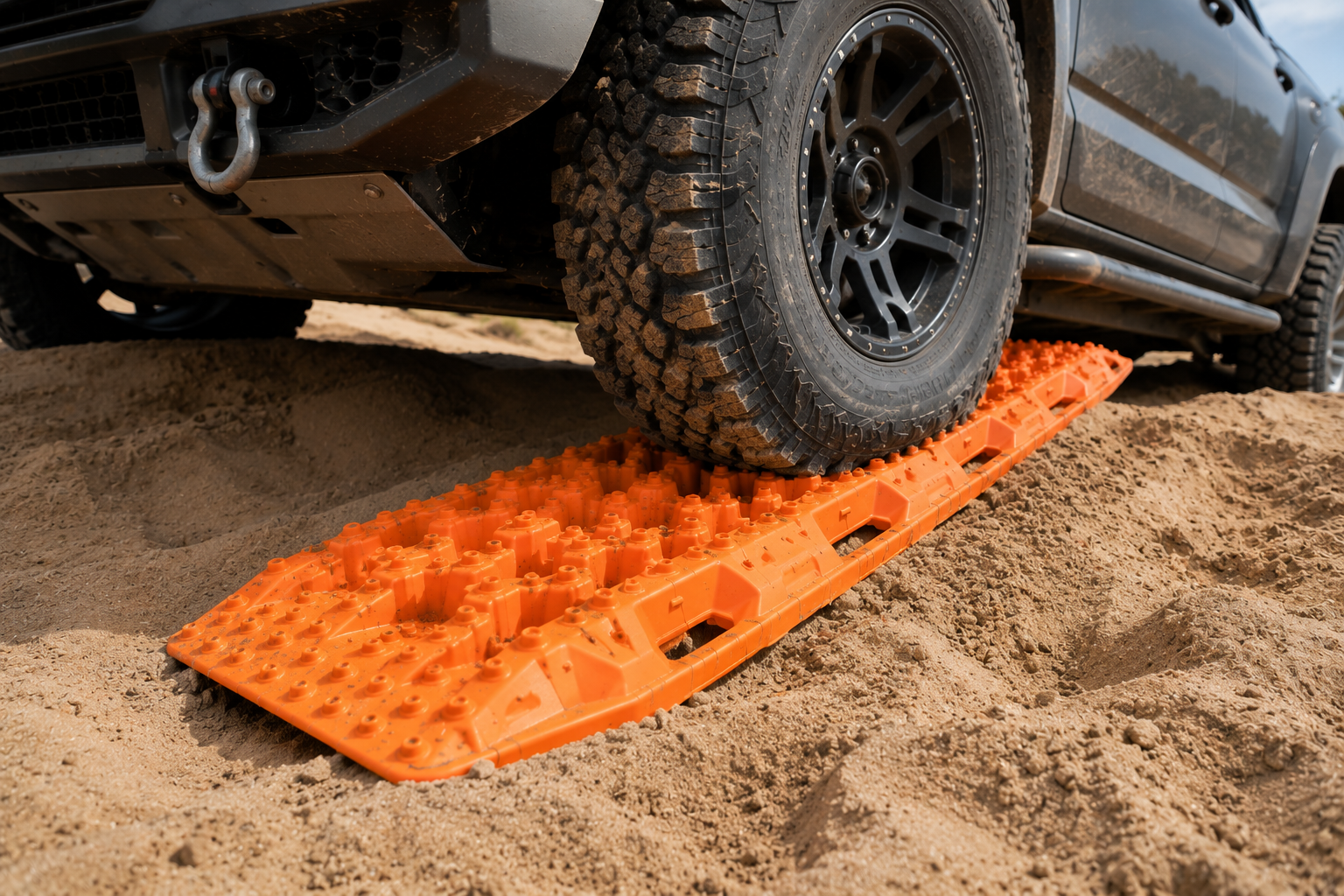
A vehicle becomes stuck when its tyres can no longer generate enough traction to move it forwards or backwards. Continuing to apply power can make the problem worse by spinning the tyres, removing more material and allowing the vehicle to sink further.
A recovery board is placed directly against the tyre in the intended direction of travel. As the wheel begins to turn, the tyre tread grips the raised surface of the board while the underside grips the terrain.
The board effectively forms a short ramp. This helps the tyre climb away from the hole it has created and reach ground capable of supporting the vehicle.
Good preparation is more important than excessive throttle. Clearing packed material from around the tyre and placing the board firmly against the tread normally produces a smoother and more controlled recovery.
Stop spinning the wheels, assess the vehicle and prepare the recovery route before trying to drive out.
Release the throttle as soon as forward movement stops. Check which wheels are losing traction and make sure the vehicle is not grounded on its chassis, axles, differential or underbody.
Decide whether driving forwards or reversing provides the easiest and safest route onto firm ground. Check for people, rocks, drops and other obstacles around the vehicle.
Dig loose material away from the leading edge and underside of the tyres. Create a gradual ramp rather than expecting the vehicle to climb over a steep wall of packed mud, sand or snow.
Push each board firmly against the tread of the tyres that will provide drive. The board should point in the chosen direction of travel and sit as straight as the terrain allows.
Select a suitable low gear and apply the throttle progressively. Avoid aggressive acceleration or wheelspin, which can damage the board's traction teeth and throw the board from beneath the vehicle.
Once the tyres engage with the boards, maintain controlled momentum until the entire vehicle reaches stable ground. Avoid stopping again in the same soft section.
Park securely before returning to collect the boards. Recovery leashes can make them easier to locate when mud, sand or snow has covered them.
Remove packed debris, rinse the boards and inspect their teeth, handles and structure before storing them ready for the next journey.
The basic process remains the same, but the amount of digging, tyre pressure and throttle needed will vary according to the terrain.
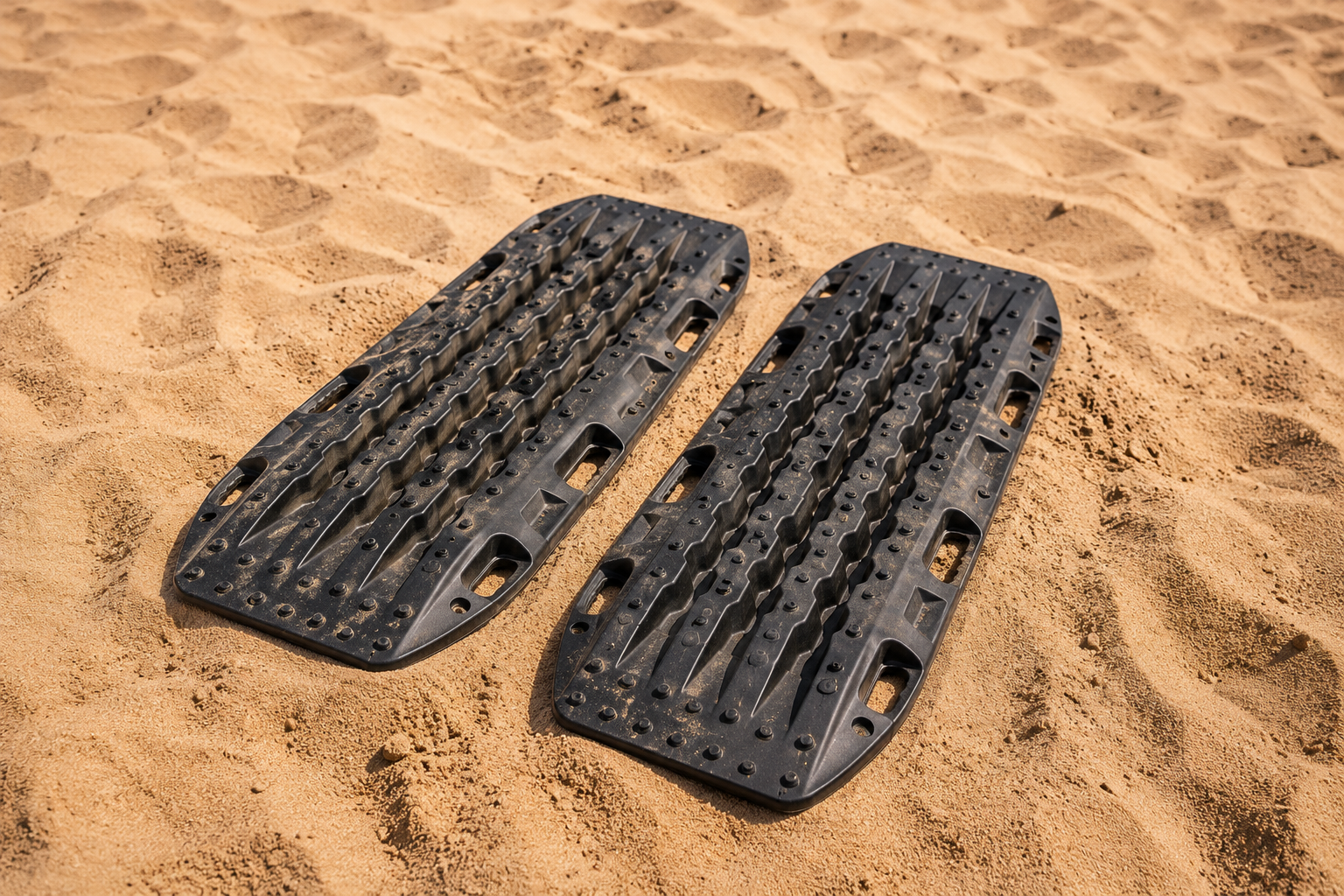
Clear sand from in front of the tyres and create a shallow ramp. Where appropriate for the vehicle, load and tyre, reducing tyre pressure can increase the size of the tyre's footprint and reduce further sinking. Accelerate gently and avoid digging new holes with wheelspin.
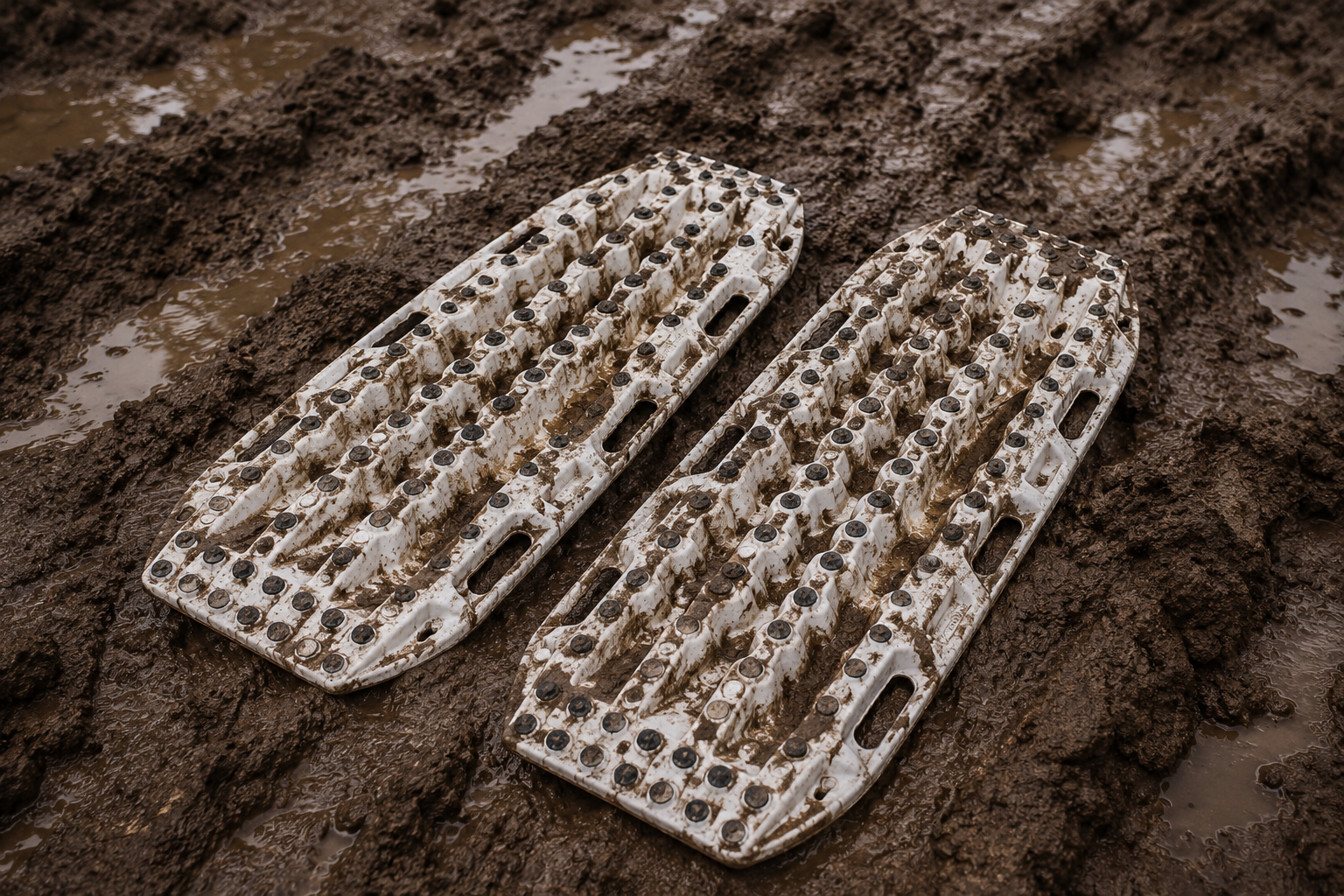
Remove thick mud from the tyre tread and from the path immediately ahead of it. Push the board deeply enough to contact the tyre. In very wet ground, several boards may be used to extend the prepared route towards firmer terrain.
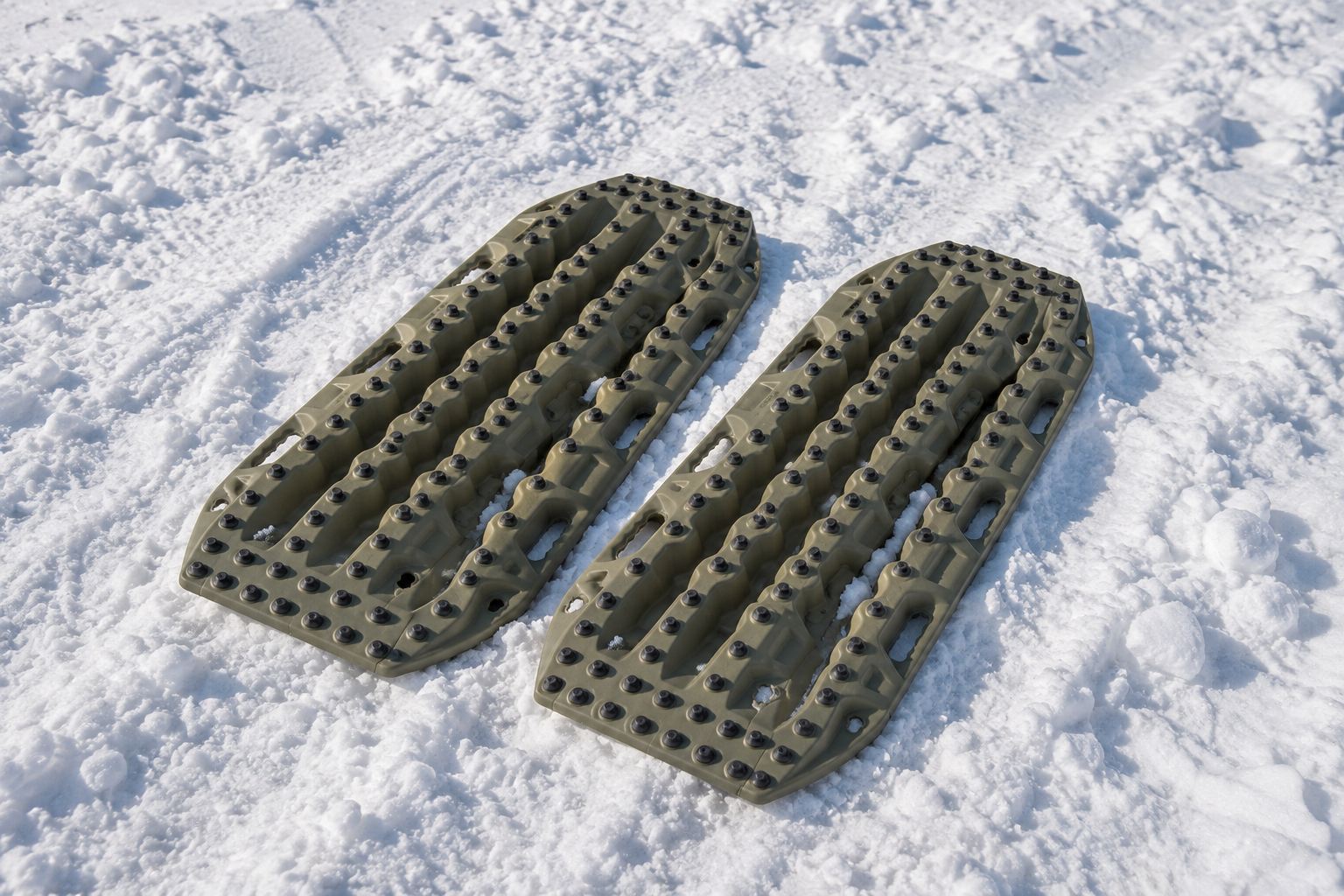
Clear compacted snow from beneath the tyres and underbody. Position the boards so the vehicle can climb onto a stable surface. Gentle inputs are especially important where polished snow or ice may cause the boards to move.
MAXTRAX offers three main recovery-board options for different vehicles and types of off-road use. MAXTRAX LITE provides a compact and lightweight option, the MAXTRAX MKII is the proven all-round choice, and MAXTRAX XTREME is designed for the most demanding recovery situations.
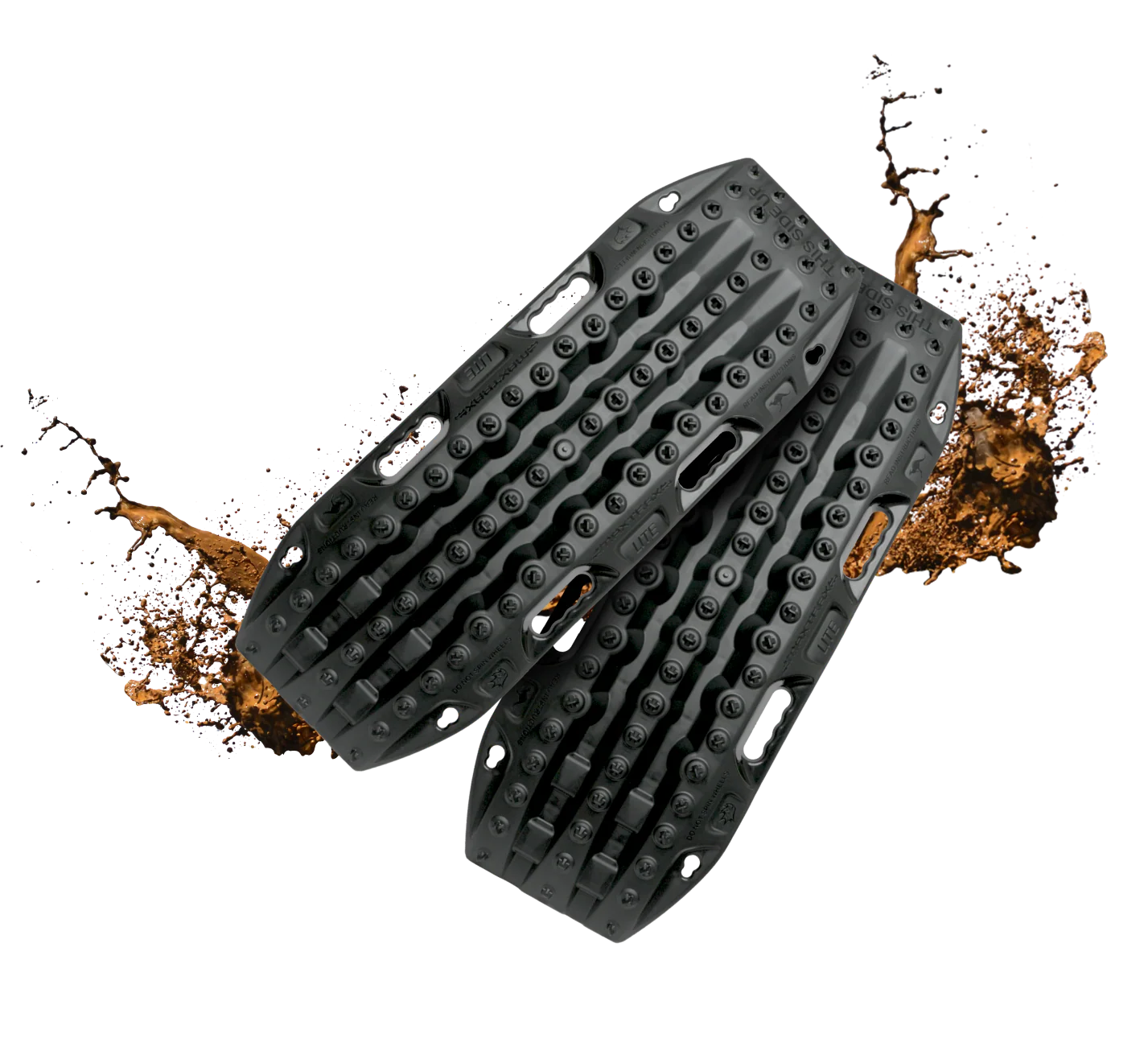
MAXTRAX LITE recovery boards are a shorter and lighter option designed for smaller vehicles, occasional off-road use and drivers who need to keep vehicle or roof-rack weight to a minimum.
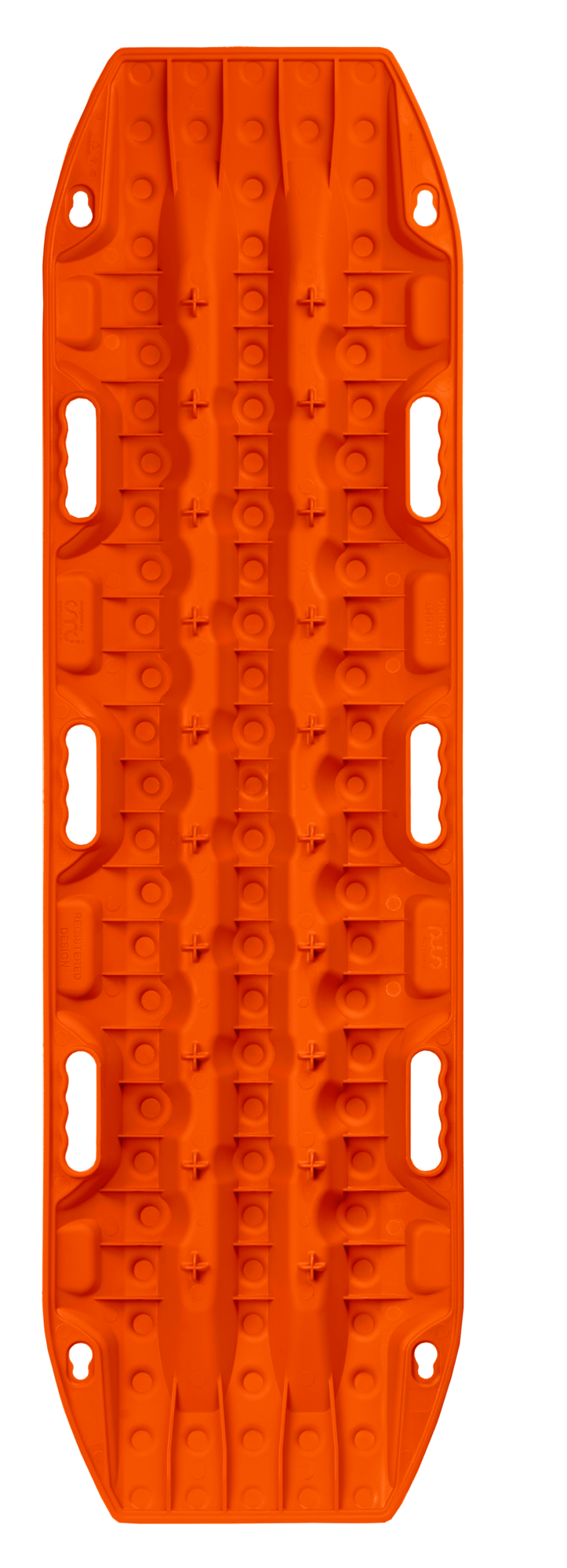
The MAXTRAX MKII is the proven full-size recovery board and the best all-round choice for most 4x4s, pickups, vans, campers and overland vehicles. It balances strength, flexibility, weight and usable traction length.
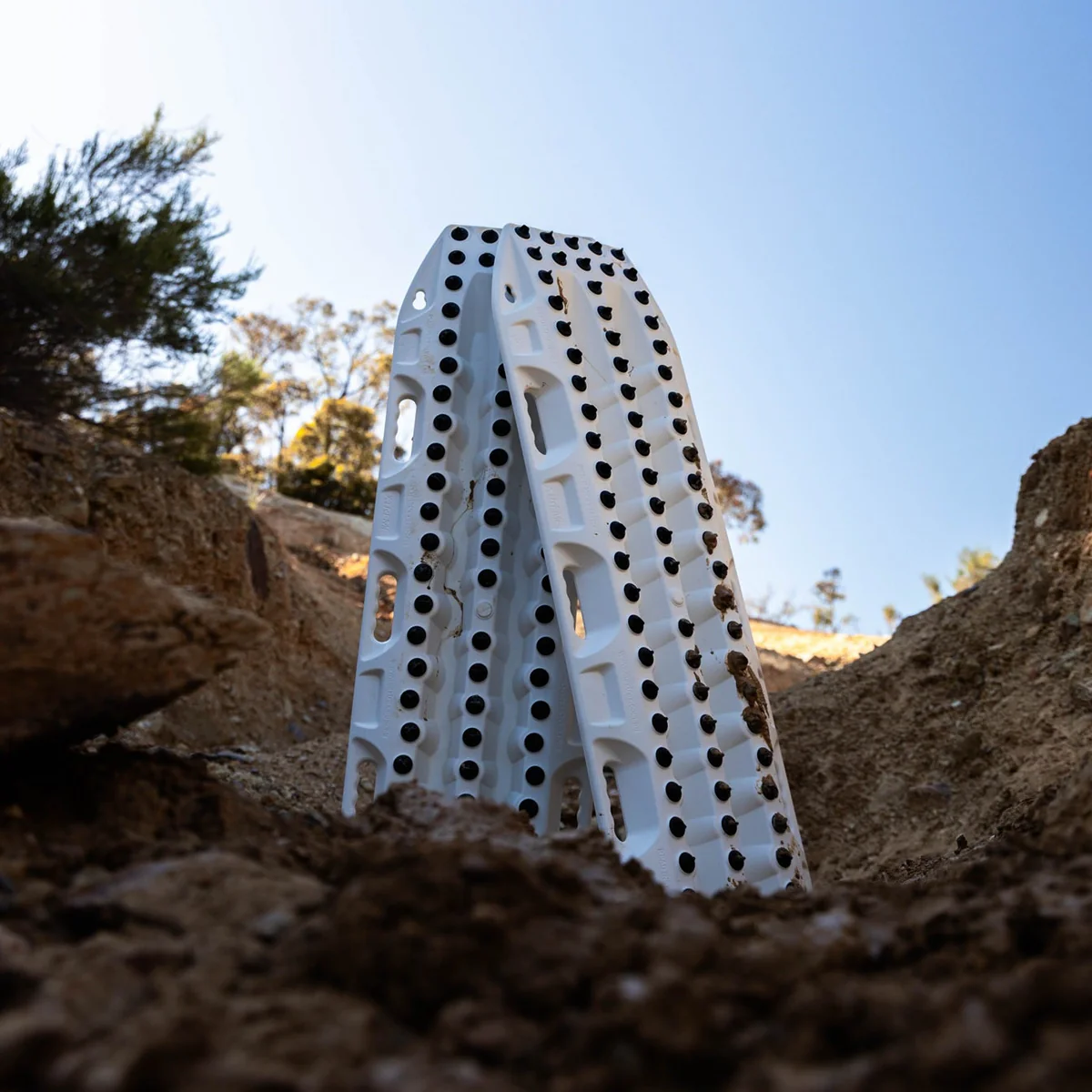
MAXTRAX XTREME recovery boards are designed for demanding off-road, expedition, competition and professional use. They use replaceable hard-anodised alloy teeth to provide faster and more secure engagement with the tyre tread.
| Model | Best suited to | Construction | Size and weight | Why choose it? |
|---|---|---|---|---|
| MAXTRAX LITE | Smaller 4x4s, SUVs, lighter vehicles, occasional off-road use and vehicles with limited storage or roof-load capacity. | Lightweight impact-resistant thermoplastic with integrated traction teeth. | 895mm long and approximately 48% lighter than the MAXTRAX MKII. | Easier to carry, position and store while retaining the familiar MAXTRAX double-ramp design. |
| MAXTRAX MKII | Most 4x4s, pickups, vans, campers, green-laning vehicles and overland builds. | UV-stabilised engineering-grade reinforced nylon with moulded traction cleats. | Full-size 1,150mm board weighing approximately 3.4kg each. | The strongest all-round balance of traction length, durability, flexibility, weight and value. |
| MAXTRAX XTREME | Heavy vehicles, difficult terrain, frequent recoveries, remote expeditions, motorsport and professional users. | Heavy-duty reinforced nylon with 88 replaceable hard-anodised alloy teeth. | Full-size board with a stated pair weight of approximately 9kg. | Maximum tyre engagement, improved wear resistance and replaceable traction teeth for demanding use. |
Choose MAXTRAX LITE when low weight and compact storage are the priorities. Choose the MAXTRAX MKII for the best all-round option for normal 4x4 and overland use. Choose MAXTRAX XTREME when recoveries are likely to be frequent, time-critical or especially demanding.
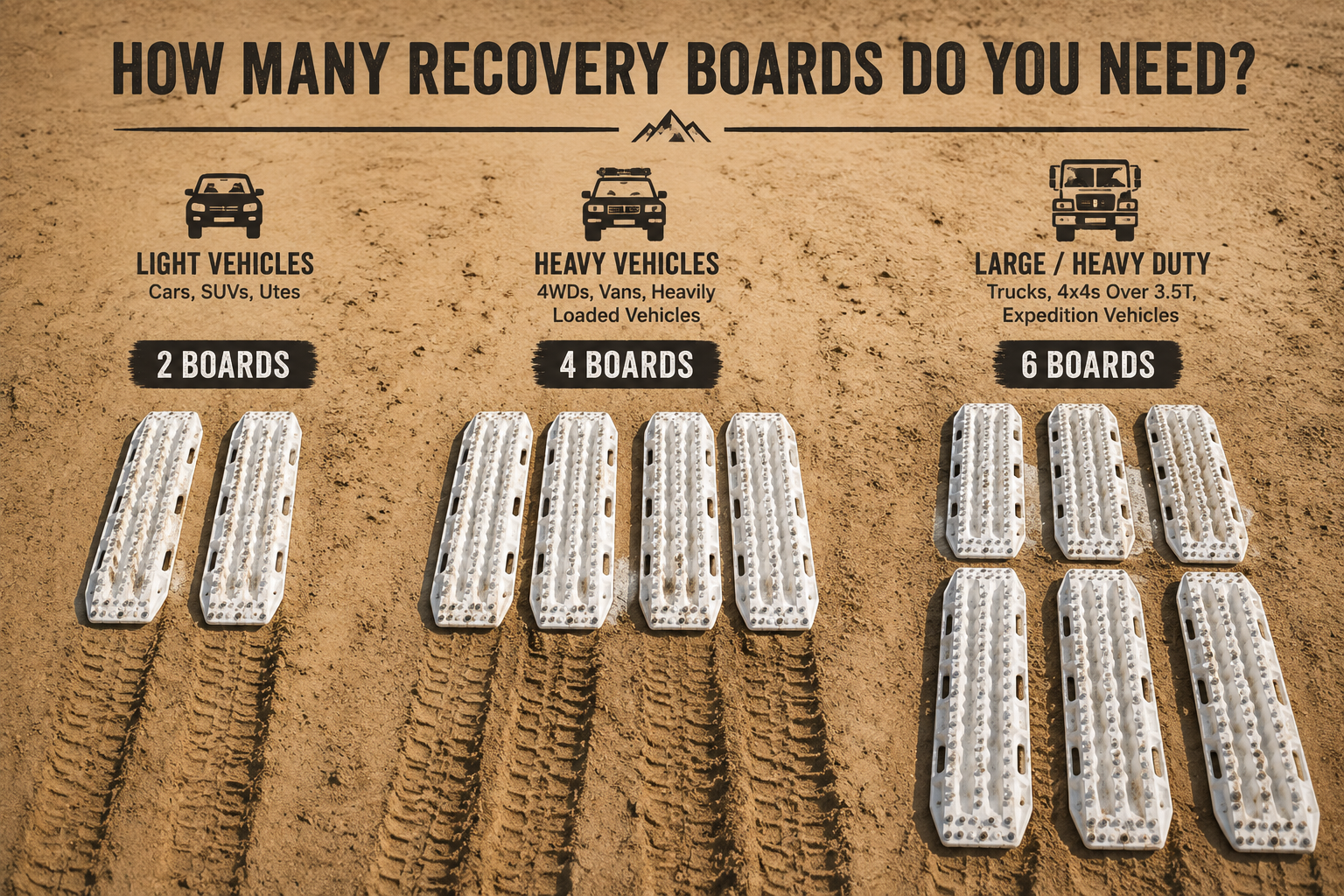
A pair of recovery boards is sufficient for many routine recoveries. They can be placed beneath two driven wheels and repositioned if the vehicle needs a longer prepared route.
Carrying four boards provides more options when several wheels have lost traction, the vehicle is heavily loaded or a longer path across soft ground is required. Four boards can also reduce the need to stop and reposition equipment during a difficult recovery.
For general green laning or occasional use, two quality boards are a useful starting point. For remote travel, heavy vehicles or repeated sand and mud driving, two pairs may provide additional capability.
Recovery boards should be accessible when needed and secured properly whenever the vehicle is moving.
Secure stacked boards to a compatible roof rack, platform or vehicle mount while keeping them easy to remove.
Help contain mud, sand and water when the boards need to be stored inside a vehicle, camper or load area.
Make boards easier to find after they have been driven over or buried in loose mud, snow or sand.
Vehicle-specific or universal brackets can position recovery boards on roof racks, spare-wheel carriers and load-bed systems.
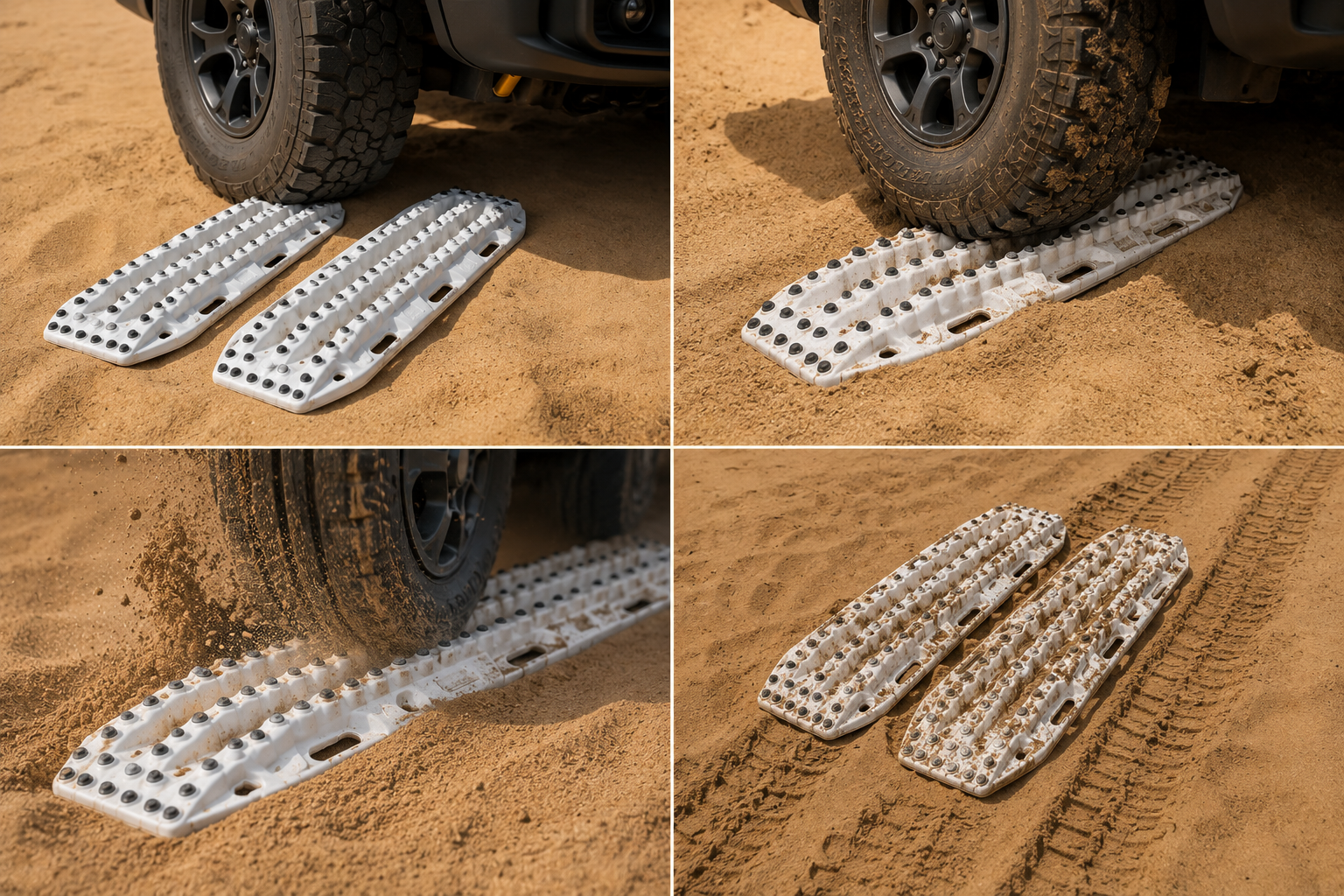
Recovery boards work best when the driver prepares the vehicle and terrain rather than relying on excessive engine power.
Recovery boards are an important part of a wider recovery kit rather than a replacement for every other tool. A well-prepared vehicle may also carry a suitable shovel, rated recovery points, shackles, recovery ropes, a winch, tyre deflation equipment and an air compressor.
Yes. When correctly positioned, recovery boards provide a firm, high-grip surface that helps a tyre climb out of mud, sand, snow or loose ground. Their effectiveness depends on suitable preparation, correct placement and controlled throttle input.
Recovery boards can assist two-wheel-drive cars, vans and motorhomes as well as 4x4s. They should be positioned beneath the wheels receiving drive. Ground clearance, vehicle weight and tyre suitability will also affect the chances of recovery.
Place the boards beneath the wheels that are driving the vehicle in the selected direction. On a permanent four-wheel-drive vehicle, choose the wheels with the best opportunity to reach firm ground and follow any advice supplied by the vehicle and recovery-board manufacturers.
Many boards have ramped or shovel-style ends that can be used for forward or reverse recovery. Check the design and instructions for the particular product before use.
Quality boards are designed to engage with tyre tread, but excessive wheelspin can create heat and damage the board's teeth. Use steady, controlled power and stop if the tyre is spinning without moving the vehicle.
Not unless the manufacturer specifically states that the product is designed and rated for bridging. Standard traction boards may break or deform when vehicle weight is applied across an unsupported gap.
Two boards are sufficient for many recoveries and are the most common starting point. Four provide greater flexibility for heavy vehicles, deep terrain or situations where several wheels need support.
Store them where they can be reached before entering deep mud or water. Roof-rack mounts, load-bed mounts, spare-wheel carriers and dedicated bags are common options. Boards carried externally must be securely fastened.
No. Recovery boards are excellent traction aids, but they cannot solve every recovery situation. A winch may be required when a vehicle is heavily grounded, immobilised on a steep slope or unable to drive under its own power.
Devon 4x4 supplies recovery boards, recovery tracks, mounting accessories and wider vehicle recovery equipment for recreational, expedition and professional use.